Safety, Occupation & Netpol

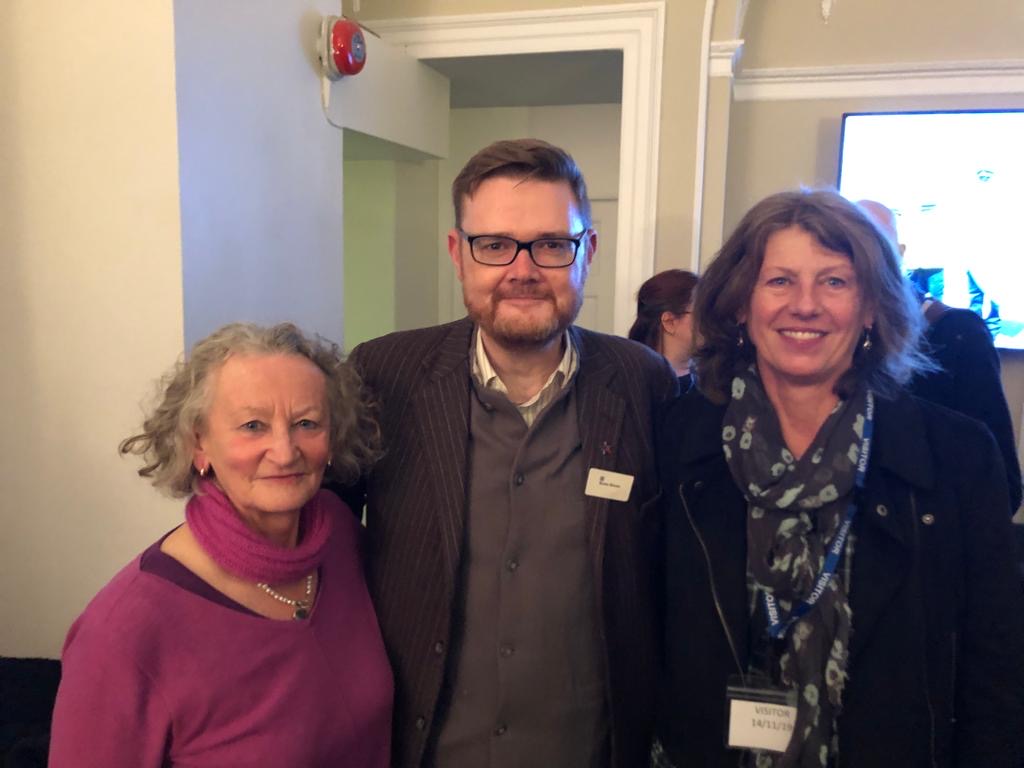
It was good to join with Kevin Blowe, Baroness Jenny Jones – a Green member of the House of Lords – and many others, to celebrate 10 years of Netpol; the police monitoring group. It was, I suppose, a bitter-sweet occasion, with a realisation that we actually need a police monitoring service to keep activists and campaigners safe and ensure justice stands a chance. Following my recent trip to Israel and Palestine, I feel even more acutely for those living under daily oppression and I am keenly aware of how US announcements on the settlements in the occupied territories must affect the morale of Palestinians in the West Bank.

On a more positive note, I was invited along with others, to examine issues of road safety. And I am delighted to conclude that the Green Party’s Green New Deal – and our own report: The Green New Deal in the North West – offer the very best solutions, with positive impacts being very quickly realised.

Netpol 10th Anniversary

Last week passing through London via my usual Eurostar journey back from Brussels, it was a treat to attend a fantastic event to honour the 10th anniversary of Netpol. This is an organisation founded to monitor police responses to public order, protest and street policing, and to also provide challenge when policing is excessive, discriminatory or threatens civil rights. Green Party peer, Baroness Jenny Jones, has worked hard to support Netpol as they’ve become ever-more important –mainly as political and environmental street campaigning increases.

Working in partnership with anti-fracking community groups and Extinction Rebellion, Netpol’s work is vital, but they are in need of funding. See the launch of their ‘Protecting Freedom to Protest Fund.

I like these words by Hannah Chutzpah, who is on Netpol’s Steering Group:

 “I’m fascinated by how successful activist campaigns and movements get absorbed into the historical narrative – with people forgetting that there ever was an opposition. Suffragettes and the Civil Rights campaigners were opposed – violently – at the time. LGSM  (Lesbian and Gays Support for Miners) have a feel-good movie now, and the Hillsborough Justice Campaign is finally getting a proper hearing: but for both, it took decades of fighting, while they were smeared by both politicians and the press. Doreen Lawrence (mother of Stephen Lawrence, a black British teenager who was murdered in a racist attack in South East London in 1993) is now a dame – but before that, she had police spies infiltrating her grieving family’s campaign for justice.”

Road Safety Week

It’s been Road Safety Week throughout Europe this week. The problems on our roads are far more serious than most realise, with pedestrians and cyclists most at risk. A report out this week by Brake, stated that one in three adults were involved in a collision or near-miss on a UK road last year.

In the European Parliament, within the newly formed cross-party group for Sustainable and Safe Active Travel, we want to focus on the “entirely avoidable” deaths of young people due to road traffic collisions. In the UK, five people lose their lives every day on the roads. A ‘modal shift’ to cycling and walking, with an investment in decent cycling infrastructure for short journeys, could drastically reduce air pollution in our major cities.

Poor air quality is responsible for over 4000 death each year in the North West. Our recent The Green New Deal in the North West focussed on some of the key policy changes required, including a commitment to put public spending on walking and cycling to at least £10 per capita, per year – on par with leading cycle-friendly countries. The future can be positive and bright.

Israel/Palestine

I was due to co-host a meeting this week in the European Parliament with two prominent and respected peace advocates: Former Israeli Ambassador and negotiator, Ilan Baruch, and Ashraf Al-Ajrami, member of the Palestinian Committee for Interaction with the Israeli Society. Sadly I was unable to attend due to illness, but the meeting, chaired by my colleague Margrete Auken, Danish Green MEP, was very informative.

Mr Ilan Baruch, after 36 years of diplomatic career including postings in Asia, Europe and Africa, resigned from the Israeli Ministry of Foreign Affairs in 2011 on grounds of principle and since his early retirement, he has been devoting time and experience to projects in public diplomacy. He is currently chairperson of a team of activists promoting the Middle East peace process based on the two-state solution.

Ashraf Al-Ajrami, former Minister in the Palestine National Authority, is together with Mr Baruch a director of a new cultural centre called the Palestine House in Tel Aviv.

Mr Al-Ajrami stated that sadly a majority of Palestinians no longer believe in the feasibility of the two-state solution, which had 70-80 % support after the signing of the Oslo Accords, now due to the Israeli Government’s actions. Many Palestinians believe that the de facto annexation has become the reality on the ground in the West Bank. He warned that the peace process is thus losing momentum.

Mr Baruch underlined the importance of the EU in speaking up and affirming its commitment to ending the occupation of the Palestinian Territories, and to the two state-solution and particularly and significantly this week when the US unilaterally decided to ‘normalise’ and legitimise the illegal settlements.

Mr Baruch also highlighted the recent ruling on labelling of products with origin in the illegal settlements as important EU action to keep the peace process alive. The EU is by far Israel’s most important trading partner and has the potential to use that leverage.

Mr Baruch saw this visit to the European Parliament as the first in many to come, and I hope to meet him in the near future.

This week’s decision by the US administration to overturn 40 years of USA policy, to declare that the illegal occupation of Israeli settlements in Palestine is in fact, not illegal as far as America is concerned, has attracted widespread condemnation and goes against international law. I wrote a piece on this grave situation for Middle East Eye.

Meanwhile this week…

Good

The seasonal festivities this Saturday (23 November) start with friends and community at the Green Christmas fair in Lancaster. I’ve been a Councillor in this area for more than two decades now and The GCF has become an annual institution. If you’re in the area, the fair is Saturday 23 November 10 – 4 at the Friends Meeting House, next to Lancaster train station. There will be all of the usual wonders with two floors of stalls selling locally-produced art, crafts, games, clothing, gifts, and much more (e.g. hundreds of second-hand books/DVDs and the ever-popular Fairfield Association calendars!) plus live music all day, Santa’s grotto and a wonderful café and all for just 50p (free for children). For the first time in 25 years, I will miss due to illness. But I have booked a delivery of a cake from a friend!

Bad

The ultimate insult to voters and democracy in the blatant use of spin and manipulation of truth by the Conservatives this week, when they set up their social media Twitter account to ‘appear’ to be a fact-checking account. Adding insult to injury, Nicky Morgan MP went on to respond that: “This is a total Westminster bubble story,” suggesting that nobody outside of political London is bothered by the lies and lack of integrity. This was then compounded by her colleague, Dominic Raab MP, who claimed “No one gives a toss” about the “social media cut and thrust” after the Tories changed their social media account. This is an appalling attitude to take in the run up to the election.

I do despair at what the  Conservative Party consider to be our new normal. As we are entering the most important final three weeks of the general election, what voters need and want is clarity and truth. The lies on buses and in print during the referendum caused a huge divide in our country and we must learn from this.

Where hope lies

The Green Manifesto launch is for me exactly where hope lies. If you’ve not had the chance to see how brilliant the future could be in the hands of a political party that genuinely cares, please do click here


Onwards
 

GND, TUC & Safe and Active Travel

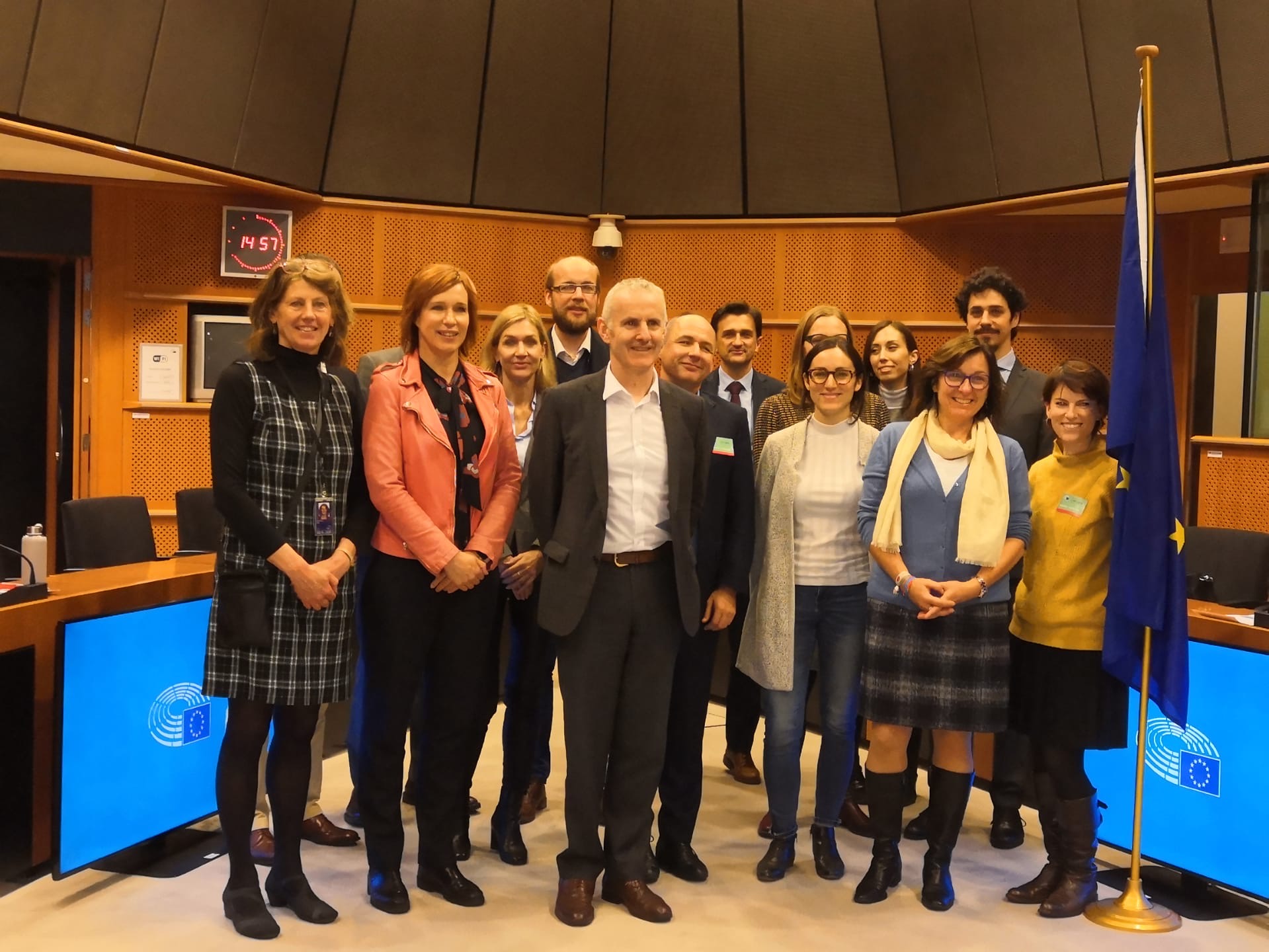
In the European Parliament, the business of committees and work on legislation goes on, and is thankfully not totally drowned out by Brexit or the UK economy and elections. This week, I met with officers of both the European Trade Union Confederation and the TUC Brussels office – a rare visit to a meeting outside the EP building. A meeting with United Nations Relief & Works Agency (UNRWA) representatives later in the week focused on the funding difficulties they’re having caused by both internal issues and the US President withdrawing funding. I sat next to a Greek communist MEP during the meeting – a first!

Meanwhile, it was mini-plenary session week again when all Parliamentarians – all 750 or so of us from all corners of Europe and the political spectrum, sit in the ‘hemicycle’ to vote on formal business. Also this week, I got the chance to talk micro-mobility with like-minds and co-write a piece on the labelling of goods from Israel.

Discussing the Green New Deal with the TUC

I was delighted that representatives from both the European Trade Union Confederation and the TUC in Brussels office responded positively to my request to meet to talk about our common ground on pushing the concept of the Green New Deal at a European policy level. We share concerns that the EU Commission’s commitment to a ‘European Green Deal’  should be underpinned by the principles we’ve included in our Green New Deal for the North West. Key of course, is that there is a ‘just transition’ in that the focus of investment skills and jobs in the new low carbon economy must ensure that workers in traditional industries are not excluded or forgotten and that there are dialogues and inclusion in shaping the circular economy and other sectors by those who work in them.

UNRWA in need

As a member of the Delegation of Palestine, I attended a meeting with United Nations Relief & Works Agency representatives including Matthias Burchard the interim director. While they admitted they are responding quickly to allegations of mismanagement, they reiterated that UNRWA is the key UN body that responds operationally on the ground across the globe to those in need, providing education, health services and basic needs and that many member states have stopped contributing funding – including the UK leaving risks to the people they serve.

Safe and Active Travel

Thanks to Irish Green MEP Ciarán Cuffe for co-ordinating this positive conversation to set up a cross-party ’Intergroup for Sustainable Safe and Active Travel.’ An informal group of us (MEPs) keen to make walking, cycling, and ‘micro-mobility’ a key focus of a sustainable transport programme were joined by various cycling and walking federations including POLIS – Cities and regions for transport innovation. There is a limit to the number of Intergroups that are formally recognised during any term of the European Parliament and so there is a bit of a ‘biding‘ process between political groups to ensure their priorities get on the list. I will be supporting this one and will also be looking at women’s safety and disability planning issue in good transport planning.

Meanwhile this week…

Good

Publication of a  joint article, together with other UK Green MEPs, on the Court of Justice decision that goods coming from territories occupied by Israel (Palestine) need to be labelled correctly so that consumers can make an informed choice when buying from the region.

“The EU has an active role to play in ensuring it does not become an accomplice of a state of occupation that it frequently denounces at a foreign policy level but instead contributes to improving the situation on the ground by promoting fair and rule-based trade policies with its trading partners.

“In practical terms, this decision means that henceforth, all products, such as wine, avocado, dates, grapes and citrus fruits are required to be labelled in all European stores and on-line retail, as explicitly coming from Israeli settlements in the West Bank or the Golan Heights, if that is the case, and not “Made in Israel”.

“The court has reminded us that EU consumers have indeed a most fundamental right to be provided with correct and objective, but also clear and understandable information on their purchases.”

Bad

Kashmir

The far-right ID group here in the European Parliament proposed introducing a parliamentary resolution on the situation in Kashmir. We Greens voted against that request, as the resolution was not introduced in good faith. Many extreme-right MEPs from the ID group recently participated in a propaganda trip to Kashmir, organised by the Indian government.

Greens voted against the initiative because we do not want to be part of this biased view of the Kashmir issue nor take part in Indian Prime Minister Modi’s propaganda stunt.

The Greens/EFA group in the EP has on several occasions tried to put Kashmir on the parliamentary agenda. On every such occasion, conservative and far-right parties have voted us down. We support the UN-led process for the impartial resolution of the Kashmir conflict, and support efforts to support the Kashmiri population stand up for their basic human rights.

Where hope lies

A moving commemoration of the 30th anniversary of the fall of the Berlin Wall was held at the start of the European Parliament plenary this week. The contrast with the current Brexiteer approach to internationalism was, of course, apparent to all.

“Thirty years ago, democracy and rule of law, and citizens’ rights won out. Many took much personal risk. Remember what is possible. It is still a cause of wonder today”

President of the Deutsche Bundestag


Onwards


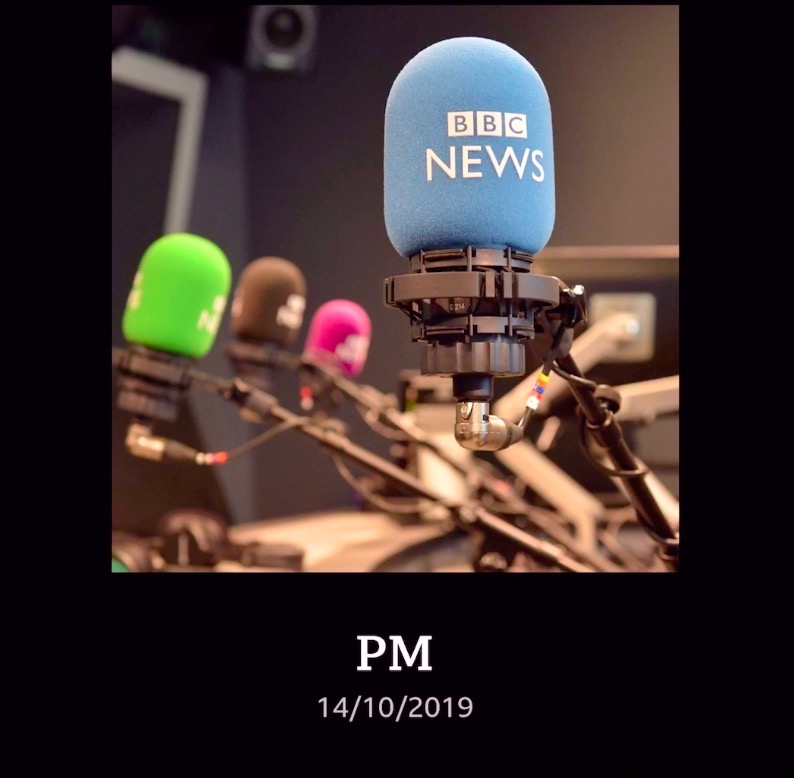
Frequent Flyer Levy: Gina on BBC RADIO 4 | Interview

You can listen below to Gina’s interview on BBC Radio 4’s PM programme, from 14 October 2019, talking about the frequent flyer levy, alongside former director of the Danish government’s Environmental Assessment Institute in Copenhagen, Bjørn Lomborg, who is a Danish author and President of his think tank, Copenhagen Consensus Center.

Gina Dowding MEP interview on BBC Radio 4, 14 October 2019


Peace, Pause & Paths forward

In the current state of politics, so much seems to happen on all fronts, every single week.

It was only last week on the 31st of October that I was able to celebrate with my staff team, UK Green MEPs and of course many more communities who have fought hard for a better solution to Brexit – that we are still in the European Union and I am delighted I can continue the good work as part of the green group in the European Parliament.

The announcement of the fracking moratorium on Saturday was a brilliant start to this week, and I have just announced that I’m running as the Green parliamentary candidate for Fylde constituency in the upcoming general election. The Green Party will prioritise environmental and social justice as always and I look forward to campaigning on issues close to my heart. Last week in the UK, we launched The Green New Deal for the North West: a report I’ve been working on since being elected as the MEP for the North West. I am pleased we are able to give some concrete, practical, real-world examples of what needs to be rolled out. There is much focus now on the concept of the Green New Deal from other parties, as well as in Europe.

Moratorium on Fracking

Some of the most welcome news for quite a while came last weekend. The government has finally accepted the position that the Green Party and anti-fracking protestors have had from the outset: there is no such thing as safe fracking.

Principally, there is no level of regulation that is capable of assuring the safety of this industry. More critically, there is no place for a new fossil fuel in a climate emergency, when all the evidence points to the need to move swiftly to a zero-carbon energy supply.

Local people will be hugely relieved following years of havoc this industry has wreaked upon their communities, and more than a few people will rest easier at night knowing that the risk of seismic tremors has gone.

This decision will give cheer to young people, climate strikers and those who understand the need to move to clean, green and cheap renewables, and I think this will be an occasion of real celebration for the hundreds of thousands of people have been involved in the anti-fracking campaign, who have helped to highlight the costs and risks associated with hydraulic fracturing.

It was clear from the start that there is no place for fracking in a 21st-century energy plan. All that remains now is for the moratorium to become a complete ban.

Green New Deal for the North West

The Green Party’s vision for industry was conceived long before it became as urgent as it is today and remains the best route out of the mess our environment, society and climate are in. The Green New Deal is a global solution that takes local, national and regional action to achieve its aims

In what was originally due to be my last week in office, last week I was proud to launch a report from my office on The Green New Deal (GND) in the North West. The report aims to demonstrate how the GND can do more than just stabilise the climate emergency: it can bring huge benefits to the region, providing meaningful and skilled jobs as well as tackling social exclusion.

Our report looks at future green energy supply, industry, sustainable transport, energy-efficient buildings, and food and land use. In every sector, we found examples of good practice which can be scaled up and rolled out. It’s all do-able and can be up and running quickly (and it needs to be).

Although the industrial sector will have to transition from current fossil fuels use to circular, zero-waste business models, it will be nothing like the damaging de-industrialisation of the past; a Green New Deal offers new opportunities to revitalise our manufacturing communities by shifting to new, greener products and services, produced with green energy.

At the launch event last week, it was great to have such excellent speakers – one for each of the different sections providing real-world examples of good practice in action. And we had such excellent feedback from those attending that we may just have to launch it all over again with a new audience!

You can download the report here.

Lancaster Peace Pole

I was delighted to be at the launch of Lancaster’s Peace Pole at the end last week, where the Lancaster Quakers together with schools and the local community held a 30-minute Dedication Ceremony. Since the Second World War, over 200,000 Peace Poles have been erected by many nations bearing the words “May Peace Prevail on Earth” in different languages. In Lancaster, the languages are English, Arabic, Japanese and Gujurati.

Meanwhile this week…

Good

This week marks 30 years since the Berlin Wall came down and the world rejoiced. It was a pivotal moment for freedom and democracy in Europe.

Having lived in Germany only five years previous to this, I was as amazed at that achievement as anyone – for many years no one has thought that such a change could ever happen.

Bad

Surely it’s not a good sign that in the year that the climate emergency became one of the most pressing issues in the political debate, the Conservatives have employed a lobbyist who works for pro-fracking agencies to write their election manifesto?

Where hope lies

There is an election on 12th December 2019 and there is every chance that on 13th December, we will wake up to a different future. Please vote for it to be a green one.

Onwards


Death Penalty, Thomas Cook & Honeybees

The clock is ticking (albeit an hour earlier than last week) and the stress is showing in UK politics. The bigger picture globally and the requirement for action on climate chaos is so much more than Brexit, and I fear that today’s news of a general election will not bring us closer to a democratic way forward for action on what matters. Meanwhile, in Strasbourg, earlier last week, issues on the plenary agenda for MEPs included Uganda’s threat to impose the death penalty on homosexuals; the demise of Thomas Cook and the need to protect workers’ rights; the protection of honeybees; and addressing clamp-downs on the right to protest.

Uganda

On Thursday, the European Parliament strongly condemned the recent developments in Uganda concerning the rights of LGBTI people. The Parliament adopted a strongly-worded resolution that followed on the Ugandan government’s announcement to introduce a bill that would impose the death penalty on homosexuals in the country. The resolution:

“…stresses that discrimination against LGBTI people undermines the most basic of human rights principles and sexual orientation and gender identity are matters that fall within the scope of an individual’s right to privacy, as guaranteed by international law and national constitutions.

“We reject the use of the death penalty under any circumstances, including any legislation that would impose the death penalty for homosexuality and call on the EU and its Member States to further engage the Government of Uganda to reconsider its position on the death penalty.

“EU institutions will continue to support civil society organisations that work with the defence and promotion of human rights in Uganda, and the EU will pressure the Ugandan government to decriminalise homosexuality.

Known as the “Kill the Gays” bill in Uganda, it was nullified five years ago on a technicality and Uganda’s Ethics and Integrity Minister Simon Lokodo said on 10 October, it planned to resurrect it later this year. African countries have some of the world’s most prohibitive laws governing homosexuality. Same-sex relationships are considered taboo and gay sex is a crime across most of the continent, with punishments ranging from imprisonment to death.

Since the announcement on reintroducing the bill, the Ugandan government has experienced a global backlash. Following condemnations by many international donors, the government has since backtracked. On 14 October, a spokesperson for Uganda’s President Yoweri Museveni denied plans by the government “to introduce a law like that”.

Thomas Cook

An oral question by an MEP prompted a debate into the liquidation of the Thomas Cook Group in the plenary. My colleague Catherine Rowett MEP spoke in the debate, which then proceeded to a vote on a ‘Joint Motion of Resolution’ on Thursday, covering the key issues from the EU perspective. The Thomas Cook fiasco has put 22,000 jobs at risk worldwide, of which 9000 are located in the UK, 2,500 in Spain, and more than 1000 in Greece. The fate of these jobs is still uncertain, but it’s likely to have considerable knock-on effects, not only on the tourism industry and on the transport sector, but on the economy as a whole.

Tourism employs an estimated 12.3 million workers and provides at least 5% of all jobs (more than 27 million workers when considering its links to other sectors) and Europe is the number one destination in the world.

The resolution notes that the crisis borne out of the bankruptcy of Thomas Cook Group is not an isolated event and may well happen again in the future. It included calls, therefore, on the Commission to evaluate the feasibility of adopting specific actions and/or measures to prevent situations of this kind from happening again in order to further boost consumer protection and passenger rights.

The Greens also proposed and voted on an amendment which pointed out how unnecessary the recent chaos was and how easily Thomas Cook could have catered for this; the need for provisions on worker protection; calling on the European Commission to study causes and future remedies (also to enforce the provisions of  the package travel directive) and to consider state aid only as a very last resort. Importantly, the Greens reiterated the importance of establishing an EU Strategy for Sustainable Tourism.

Egypt Protests

Discontent, fear and the abuse of power are behind uprisings that it seems are everywhere; from Chile to London, Hong Kong to Egypt and many more. Uprisings against oppression and for the environment; just individuals screaming out for their rights, the safety of their families and the future. This week, the EU Parliament condemned the crackdown on protests in Egypt and adopted a resolution strongly condemning the Egyptian government’s recent crackdown on peaceful protesters and the ongoing restrictions on fundamental rights in the country. We called for:

“…an end to all acts of violence, incitement, hate speech, harassment, intimidation, enforced disappearances and censorship.”

As well as for an “independent and transparent investigation into all human rights violations and for those responsible to be held to account.” The resolution also demands the immediate release of all human rights defenders detained or sentenced during the recent protests.

Debrief with Michel Barnier

I attended two meetings with Michel Barnier as he explained his role in the recent negotiations to bring about Johnson’s Brexit deal. In short, it is clear that the EU have to work with the Prime Minister of the UK regardless of his shrinking mandate. My gut feeling about all of this is we shouldn’t underestimate what horrors lie ahead for the UK as corporate interests step in (those who rub their hands in glee at the prospect of lower regulations and standards) if we step out of Europe.

Meanwhile this week

Good

As a block, the European Parliament has the power and influence and to stand up ‘for the little guy’ – in this case – the honeybee, and our work this week was vital. The EP voted positively on a Green/EFA resolution to ensure there will be no relaxation of regulations on pesticide use so that honeybees can be protected.

Bad

Manipulation, disorder, disorganisation in the UK Parliament that continues to drain and exhaust MPs, staff and resources. Right now, I am very sorry to see that other parties who were previously supporting a People’s Vote, now veering towards calling for a General Election. Disappointing indeed. Nearly all political commentators and politicians in their hearts – know that a General Election will not serve to find a clear way forward nor heal divisions.

Where hope lies

This week I am launching my report: The Green New Deal for the North West – and we have had a brilliant take-up of places from a range of agencies and strategic players, so much so that we weren’t able to publicise more widely. However, with an extension in my role as MEP in sight, I will be able to continue to communicate our ideas of how a radical transformation of how we do business, and a decarbonisation of the economy can address the climate emergency, create meaningful jobs and bring about a better quality of life for all.

Onwards