Tick-Tock

There are always grumbles about putting our clocks an hour back at this time of year at the end of the ‘daylight saving time’. The clocks back ritual seems to exacerbate nature’s shortening of the days, bringing on early darker evenings for months and is barely compensated for by the one-off extra hour in bed. But other than learning to remember to ‘Spring forward’ and ‘Fall back’ – it’s not a huge talking point for most beyond the first few days of November. Winter evening darkness seems to have become accepted – much more so than the weather, even though we ultimately have more control over it.

As an MEP in the European Parliament, I have a new perspective now and the subject is a whole lot more interesting and important than I expected. Working on the Transport and Tourism Committee, on cross-border issues and in a cross-party context on a myriad of matters, I have discovered that on the subject of ending the seasonal time changes, we’re currently at an impasse. Following an EU survey in which the vast majority of the 4.6 million respondents voted to discontinue the practice of switching clocks forward by one hour in spring and back by one hour in autumn, European Commission President Jean-Claude Juncker announced in September last year plans to end daylight saving time. It seems most agree that no longer applying seasonal time changes is sensible. But whether we stay on ‘summer time’ or ‘winter time’  could be an issue – especially with 27 Member States each choosing for themselves!

“Clock-changing must stop. Member states should themselves decide whether their citizens live in summer or winter time.” Commission President Jean-Claude Juncker

Despite the above declaration by Juncker, the European Council has blocked progress. It’s controversial because, despite the European Parliament’s support for the proposal, made with good intent, the decision to give member states control presents problems that could make Europe look like a patchwork of time-zones! Here’s some background:

Subject: “Discontinuing seasonal changes of time and repealing Directive 2000/84/EC”

In the Commission’s public consultation, admittedly dominated by responses from the Germans – 84% were in favour of discontinuing the bi-annual clock changes and only 16% wanted to keep them. (A full, detailed report on the results of the consultation can be found here.)  Essentially the reasons for abolishing the current clock changes arrangements boil down to advantages to human health (43%),  and lack of energy saving in the current system (20%).”

In March this year, the European Parliament adopted its position on the Commission proposal, under the draft directive, which passed by 410 votes to 192 to support a stop to the seasonal clock changes by 2021. Member states would be able to choose whether to remain on “permanent summer” or “permanent winter” time with a timetable of adjusting their clocks for the final time on the last Sunday in March 2021 or the last Sunday of October 2021 respectively. But the Council has not yet finalised its position.

Tricky Dilemma

The tricky issue is the result of leaving Member States the freedom to decide their standard time. Currently, there are three standard time zones in the EU: Western European Time in Ireland, Portugal, and the UK and of course known to us as British Summer Time ( BST), Central European Time in 17 Member Stats,  and Eastern European Time(EC). These zones make sense as one moves from east to west. Its theoretically possible if left to national decision making that one or more of the 27 or 28 member states could choose a permanent time zone completely out of kilter with this natural current east to west phasing, creating a ‘patchwork’ of time zones.

When Did All This Start?

The history of the time change was in fact created with a clocks forward initiative as some European countries introduced summertime arrangements in the last century to save energy, particularly in times of war [First and Second World Wars – first introduced in 1916] or during the oil crisis of the 1970s. Starting in 1980, the EU gradually adopted legislation putting an end to the diverging schedules of the national clock changes and since 2001, EU summertime arrangements have been governed by Directive 2000/84/EC –  setting out the obligation on all Member States to switch to summer-time on the last Sunday of March and to switch back to their standard time (“winter-time”) on the last Sunday of October.

What’s Good for Our Health?

As a former public health specialist in the NHS, I always look to the evidence on the health and safety implications of policy changes. There are two key issues. Firstly does the switching from one-time zone to another itself causes health problems. Critics argue that disruption to circadian rhythms (sleep patterns) can negatively impact on human health. Studies suggest that although getting an “extra hour of sleep” when the clocks move back does not lead to people sleeping longer, the loss of an hour of sleep when the clocks move forward negatively affects sleeping patterns for several weeks afterwards. (Guardian)

At the very least there is a recognition that for a nation that is already sleep-deprived (a study found that on average Brits are missing out an entire’s night sleep per week) having our alarm thrown out of whack by an hour can make matters even worse (Huffington Post).

There are studies that hormonal changes resulting from bad sleep can contribute to conditions from a worsening of bad skin to increased stroke risks (Huffington Post).

And others (Studies) have found that the risk of having a heart attack increases in the first three weekdays after switching to Daylight Saving Time (DST) in the spring (BMJ Journals).

However, most of the traditional arguments are around whether lighter evenings or lighter mornings in the winter time are better or worse for safety risks especially relating from road collisions. Each year, when the clocks go back in the autumn, there’s a marked spike in the number of vulnerable road users killed and seriously injured. According to the Department of Transport, in 2017 pedestrian deaths rose from 37 in September to 46 in October, 63 in November, and 50 in December. The casualty rate for all road users increased from 520 per billion vehicle miles in October to 580 per billion vehicle miles in November.

During the working week, casualty rates peak at 8am and 10am and 3pm and 7pm, with the afternoon peak being higher. Road casualty rates increase with the arrival of darker evenings and worsening weather conditions. And it is vulnerable road users – such as children on their way home from school and cyclists – who would experience the most benefit.

It’s estimated that retaining British Summer Time (BST) all year would save at least 30 lives and prevent many more serious and minor injuries, each and every year. This is because drivers will have the benefit of extra daylight during the evening commute through the winter, protecting vulnerable road users, particularly pedestrians and cyclists (*The Royal Society for the Prevention of Accidents).

Economic and Energy Saving Effects

A BRE report from 2005, prepared for DEFRA, that expanded on earlier work considered the effect that changing UK clocks from GMT to British Summer Time had on energy use. The conclusions in the UK were not encouraging: “As these results are based on a limited number of simulations, there is uncertainty associated with the final figures. However, it is unlikely that a switch to BST all-year-round would lead to significant CO2 savings.” Fifteen years on, it could be argued that an update would be timely (BRE Group).

Meanwhile the retail and tourism industries claim they would benefit from the extra hour of summer evening daylight. 

The farming industry has traditionally disliked DST for its impact on everything from milking cows to reaping harvests. But a National Farmers Union spokesman painted a more nuanced picture:  

“The last time we tested opinion among our members there was a narrow majority in favour of lighter evenings” National Farmers Union.

The aviation sector is little affected. Plane schedules have to work internationally around countries changing clocks at different times. Fewer time differences, it is argued, would facilitate cross-border trade and travel in the EU.  

One thing is clear. Having consulted with the public at a European level it’s not good for the EU to take no future action, especially when there was such an overwhelming response in favour of ending the time changes. Although unlikely, it’s just possible that by announcing that it would be for each Member State to choose WHICH permanent time zone to adopt, Commission President Juncker may have precipitated an increase in differences between Member States – a very un-European outcome. 

Could we just switch to and live with permanent summer time without having chosen it for ourselves? 

I would, for one. 


Tackling Racism, Research and Rudeness

The contrasts between the Parliaments of the UK and the EU have never been starker than this week. I watched from Brussels as our UK MPs returned at last to the House of Commons only to end up embroiled in ugly scenes of disrespect and outright misogyny. It feels like we’re in dangerous territory and the situation is failing to improve despite the Supreme Court ruling making it clear that PM Johnson acted unlawfully.

In Brussels this week, the scenes playing out for me were warm, professional and with clear purpose; from the Shared Future Hearing attended by MEPs from many parties from the Republic, Northern Island and Britain, to the inspirational launch of work on anti-racism and diversity in the European Parliament and the huge exhibition and consultation days on research and innovation.

Back home and along with Cumbrian architects, sustainability experts and representatives from other political parties, I joined a panel discussion and Q&A following the film screening of the film The Age of Stupid in Keswick; and then to the fabulous Make it Matter Craft Fair in Cockermouth. I write this as I prepare to speak at the rally in Manchester (during the Conservative Party Conference) calling to ‘Defend Democracy and Reject Brexit’.

Shared Future Hearing

I attended this first cross-party hearing on Brexit in the European Parliament on the impact of Brexit on the island of Ireland. With a keynote speech from former Irish Taoiseach, John Bruton, we watched a direct message from Tony Blair, had powerful accounts from community groups (both ‘sides’) and young people who had come from Northern Ireland and were reminded of just how hard-won and valued the Good Friday Agreement is.

Organised by Alliance Party MEP Naomi Long, the #BrexitHearingEU warned how devastating a Brexit could be on the peace process. All agreed that no hard border on the island of Ireland could be tolerable and that no realistic suggestions have been made to avoid it. It seems to many that this is a circle that just cannot be squared.

A highlight for me was hearing from Ellie Crawford of the Northern Ireland Student Climate Network and Doire Finn, co-founder of ‘Our Future, Our Choice’ who are determined to ensure that young people across Northern Ireland have their voices heard and gain a People’s Vote.

Anti-racism and diversity at EU Parliament #ARW19

Fantastic energy and commitment to anti-racism and diversity action at #ARW19 this week. It was uplifting to see our own Magid Magid MEP co-chairing and launch this new formally recognised cross-party ‘intergroup’ within the Parliament to address racism and increase diversity, with support from The European Network Against Racism (ENAR), a network of member organisations across Europe aiming to combat racism, racial discrimination, xenophobia.

Afterwards, I connected with Laurie and Kim from The Runnymede Trust, the UK’s largest race equality organisation, which has produced some extremely helpful briefings. One particularly welcome is about how we challenge current discussion around race and class. In short, they advocate a public conversation about politics and inequality which builds solidarity across ordinary people to address the urgent issues facing society today.

What we’re up against is that ordinary people from all backgrounds, from the rural towns of northern England to the tower blocks of London, have been divided and pitched against one another. Too often, people are pitched along the lines of Brexiteers/Remainers, deserving/undeserving, British/foreigner, white/migrant/BAME. So I’m pleased to have met these wonderful women. As well as Zlachar from Apna Haq. Short video clips coming soon.

Research & Innovation

Mid-week, I attended a couple of sessions in the European Commission’s research and innovation days – tentatively reassuring to hear loud and clear commitment within the Industry and Digital cluster to the Horizon Europe (research funding) objectives to research the circular economy innovation and climate-related activities. Europe is ahead again in terms of understanding the importance of the circular economy whereby industrial processes must use and produce materials that are inherently recycled and recyclable.

This was a massive event in a Brussels exhibition centre, and I was disappointed not to have had time to visit more stalls or sessions (the future generations of sustainable batteries nor to experience Sea Bubbles – the zero-emission boat on the canal outside). I am ever-more excited to be the Greens/EFA representative on these themes of EU work.

Formal business

Among other formal business, I also attended the Transport and Tourism Committee Meeting. All of the European Parliament’s committees are preparing for ‘hearings’ with the new Commissioners-designate (the new ‘college of Commissioners’ in-waiting). One Commissioner from each member state is proposed by the new President of the Commission, Ursula von der Leyen.

Each committee can give its consent to, or recommend rejection of the proposed commissioner for their specialist area. The Greens/EFA use this opportunity to test the understanding and real commitment of each Commissioner-designate to the values and climate targets the EU has set.

Supreme Court ruling

The UK Supreme Court ruling confirming that PM Boris Johnson’s proroguing of Parliament was unlawful, was a relief to hear. It had seemed obvious to most that the PM’s motivation was not for the good of the country, but to fulfil his own political agenda.

You can watch my short statement on this momentous ruling hereIn the press, I joined many in calling for Mr Johnson’s immediate resignation, and for Parliament to be reconvened straight away so that it could “begin to chart a sensible path through this national crisis”. Seeing Parliament return though was only briefly uplifting as the atmosphere and behaviour of some MPs were hostile and unprofessional. It was clear Johnson always wanted to make his mark on history – in reality, he has left an unpleasant stain on democracy. I just hope it will fade in time.

Meanwhile this week

Good

I was delighted to be in Cumbria for 24-hours (a treat to be in the rural landscape, even if briefly!) and enjoyed discussions with the crowd who came to the see the decade-old but must-see The Age of Stupid film. Highlighting inaction on climate as nothing less than stupidity, another ten years have passed when we could have been working on developing solutions. So good that organisations such as Cumbrian Action on Sustainability‘s Green Build Festival have been developing and showcasing solutions for energy-efficient and zero-carbon homes. In Cockermouth, the Taste Cumbria fair was busy selling locally made, delicious and healthy foods. Just as it should be.

Bad

The way the House of Commons has looked this week has been ugly and painful to watch. The European Parliament is a pleasure to work in: a respectful, professional and fair workplace with resources, processes and behaviours that go a long way to improving outcomes. My heart goes out to those elected to be in the House of Commons who simply want to represent their electorate and do the job of an MP – rather than facing a barrage of booing and rudeness that only succeeds in further hindering any hope of good-purpose shining through.

Where hope lies:

Reading about the potential for Britain to enjoy 400 billion more flowers if road verges were cut later and less often! Wildlife charities have drawn up guidelines drawn along with highways authorities and contractors that show how this will provide grassland habitat the size of London, Birmingham, Manchester, Cardiff and Edinburgh combined. Stunning what the little changes can do!

Onwards


Youth, Truth and Reason

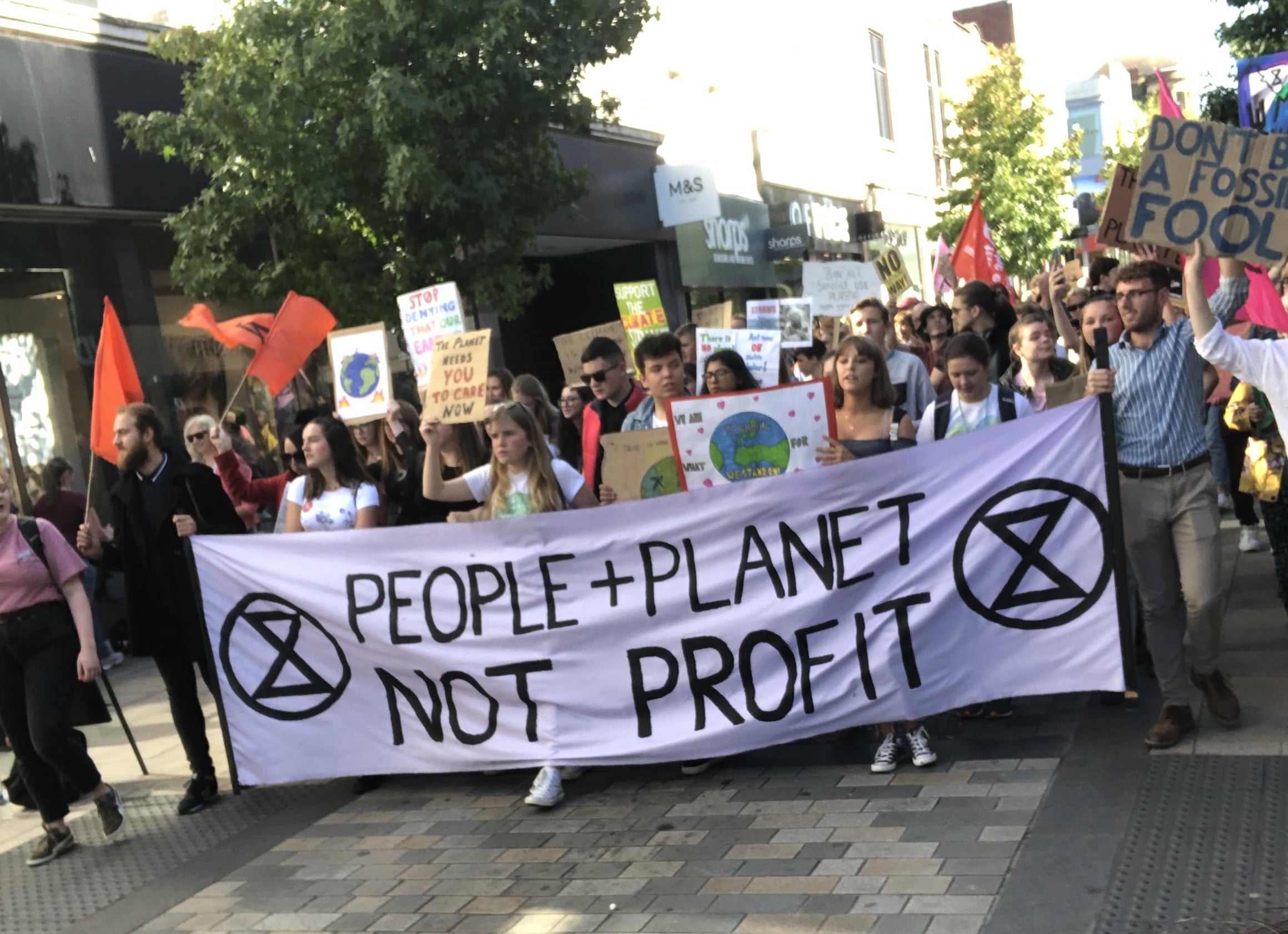
Leading this week’s thoughts and therefore this summary, the global #ClimateStrike that took place on Friday. The scenes unfolding on the news as each location started their day, were quite breathtaking! Young, hopeful, enthusiastic faces filled the screens and the streets with determination and clear messages. I joined two of our North West strikes, in Preston and Lancaster and came away revitalised after a busy week that started in Strasbourg on Monday. Along with fellow MEPs, we took a vote on a Resolution prompted by the potential for a ‘no-deal Brexit’ and the prorogation of UK parliament. Later in the week, on the eve of the climate strikes, Green MEPs led the call for a fracking ban – I hope you got to see the video. I also attended the Lancashire County Council meeting to discuss pensions.

#ClimateStrike

It’s the power of the people that demands parliamentarians address climate issues that have been for far too long, ignored. Nothing has had more impact than the call from the young climate strikers that started with the inspirational Greta Thunberg just one year ago.

On Friday, as I joined two amazing events (Preston and Lancaster) I was so buoyed by the energy and determination I saw. The young particularly, speaking such clear, plain, truths to power; it made me wonder why it is such a surprise to hear such honesty? I think it was Greta who said that it’s because the young have no concern for ‘Power’s’ view of them, so they can speak with without thinking of the consequences to themselves, whereas adults speak with the concerns of reputation etc. Every young hand that took a microphone on Friday, broadcast what we as adults, and those in positions of power, absolutely needed to hear.

I spoke on the day about the significant role each of us had at the #ClimateStrike – in this truly global movement and that it’s actions like this that are going to make the climate transition to a zero-carbon economy happen. I also took the opportunity to thank those who showed the confidence to elect me as the first MEP for the Green Party in the North West – showing a willingness to say yes to change and to getting new ideas from the North West, into the EU Parliament. And it’s in the EU Parliament that I see how hard the Greens are fighting, for the vision we all want to see. The May 2019 elections were called the ‘climate elections’ as the Green surge exemplifies.

What we were saying on Friday to politicians – locally, nationally (when they’re open!) in the EU and internationally was that we want action, not words, system change, not climate change and those changes have to start now.

Our demands are simple:

  1.  No new fossil fuels (and the shale gas industry can pack up and get out of Lancashire right now!)
  2. An end to existing dirty fossil fuels. We need to power down from coal, oil and gas and power up renewables. We’ve got the technology and the answers, all we need is a level playing field. For every pound invested in renewables, we get cleaner energy as well as more jobs; this transition will solve other problems we currently face too.
  3. A just transition across all sectors from sustainable transport systems; energy efficiency new buildings retrofitting our old ones to achieve both environmental and social benefits (end to fuel poverty); changes to the way we use the land, how we grow our food; and a circular economy. Recycling and renewables will bring jobs, reduce harm to the planet and improve our lives – what’s not to love? In essence this the Green New Deal. It’s not complicated but what’s needed is political will.

Everyone who took part in Friday’s protest was on the right side of history – in fact, we were history!

Strasbourg

This week, the European Parliament moved to Strasbourg for the formal and high-pressure plenary sessions when the media attendance (and the marginal Brexit Party MEPs) are in full swing. There was an intense and serious atmosphere when we sat for the day’s business on Wednesday: the President of the EU Commission, Jean Claude Junker and the chief negotiator Michel Barnier had been in attendance earlier. The subject: “The UK’s withdrawal from the EU”.

The session was informative and resulted in the EU Parliament passing a resolution which insists that any Brexit deal must include the Irish Backstop, or equivalent legally-binding guarantees. It also calls on our UK government to produce written proposals on a backstop alternative and makes clear the EU Parliament’s support for a Brexit extension in a wide range of circumstances, including avoiding no-deal, an election, a second referendum, ratifying the agreement or revoking article 50. The resolution passed by 544 to 126 MEPs; (NB it is not, however, the European Parliament that has the final say: it is the European Council i.e. the Heads of Government of the other 27 countries at heir meeting on October 17th).

Kashmir

The last day of plenary receives ‘urgency motions’ whereby the European Parliament calls for action on (or condemnation of) human rights abuses worldwide. More powerful than those are ‘plenary initiatives’ which warrant fuller debate and this time I spoke regarding the situation Kashmir; in which the High Representative of the Union for Foreign Affairs and Security Policy (comparable in layman’s terms to an EU’s Foreign Secretary). The call includes for the Indian government to reinstate civil rights, and to stop the lockdown. While there has been a long-running conflict in the region, the current clampdown on civic life by the Indian government further jeopardises any diplomatic process achieving peace. In the North West, we have many settled communities of Kashmiri heritage, desperately concerned about their loved ones.

Meeting the lobbyists

Along with Molly Scott Cato MEP, I met with two representatives from Make UK, champions of British manufacturers and manufacturing with almost 3 million employed in this sector in Britain. We talked about how a ‘no-deal’ would drastically hit this sector no matter how well businesses had prepared. Make UK made it clear that in any forthcoming general election Make UK will be arguing the case for remaining in the EU, one of the first times as an organisation they had not supported Conservative Party policy.

Make UK fall into the category of lobbyists. I have formally met with Tech UK and the Federation of Small Businesses. In the interest of transparency, I will be publishing a full list of anyone I meet!

The incoming EU Commissioners

A much stranger meeting was with a representative from the European External Action Service who asked to talk to me about the ‘commissioner-designate’ (that’s the person the President of the Commission, Ursula von der Leyen, has nominated) who has been earmarked to take on the portfolio for ‘Neighbourhood and Enlargement’. As a member of the Foreign Affairs Committee, I will, in any case,e be part of the hearings with the said Lazlo Trocsanyi from Hungary. As a group, the Greens plan the kind of questions they want to put to all the incoming commissioners during the next few weeks.

Pensions

At the meeting at Lancashire County Council for the Pensions Committee on Friday morning, I tried again to strengthen our call, as a Local Government Pension Fund, to exert our powers for better ethical investing (albeit this is not the language they want to hear). I asked for a report on how and what is needed for us (investors) to obtain more information about how much the companies we invest in are spending on lobbying. Current requirements of the FTSE companies to report amounts on lobbying are woefully lacking. This means that activities by companies who, despite PR the contrary, may be trying to resist regulation or higher standards are not transparent.

Meanwhile this week

Good

Chorley Council set a great example of how to work with the community together on the issue of our lifetimes, the climate emergency. Councillors and staff coming out to speak to young strikers, with respect and a genuine aim to include their voices in reaching for solutions.

Bad

Lancashire County Council refusing to send anyone downstairs to speak to climate strikers in their reception; instead, the police came and ushered staff out of back doors and behaved as if there was a terrorist threat – rather than Lancashire’s young people calling for help!

Where hope lies

Unsure if it will be where hope lies but the Supreme Court will rule later in the week on the use of prorogation by the PM – will be watching closely to see where this leaves the state of UK politics that currently teeters on the edge of mayhem.

Onwards


Success, Failure & Determination

Quite a week that started and ended so brilliantly, with a group of young climate campaigners from the North West visiting the EU Parliament and coming home to the UK, inspired and energised to be the voice the environment urgently needs. In between were the darker times, as along with fellow MEPs, I signed a joint letter on the truly awful situation in Kashmir and discovered more about the antics of 25,000 corporate lobbyists in Europe.

“The young people striking opened doors for me that had not opened in 10 years of climate action here in Parliament.” – Molly Walsh, Friends of the Earth Europe speaking with our visiting group of young climate campaigners.

The Visit

Taking 17 young climate campaigners to the European Parliament was everything I hoped it would be and much more. Fellow MEPs and European Parliament staff took the time to explore with them the way the Parliament here works and although a demanding schedule, it was very much worth it. Treated with the respect they deserved, our group were inspiring to watch and asked questions that would have given Dimbleby reason to applaud!

This visit to the European Parliament in Brussels is the first of two I have planned and if we stay in the European Union, I’d like to do many more. The opportunity to visit a place of politics in this way is rare and valuable, making it available to people from diverse backgrounds will benefit all involved – including those in Parliament who so attentively answer the questions and explain the processes.

The following snippets from just some of our participants make clear why I am so delighted with the outcome of this visit and eager for the next. We will have the full range of feedback uploaded on to the website next week:

Paris Hayes, 18, Bolton

“To be told by MEPs from across Europe that climate strikes have had an impact is nothing short of inspiring and provides hope to climate justice campaigners of any age. Knowing that collaboratively in Europe there is people trying to tackle the looming climate catastrophe signals to us that our future is looking brighter. As we know, environmental issues do not remain within the man-made borders of countries and by working together we can deliver better and stronger environmental protections such as clean air directives.”

Amy Woods, 21, Crosby, Liverpool

“I feel very privileged to have been apart of this trip to the European Parliament in Brussels, alongside so many amazing young activists from across the North West. Our time in Brussels allowed us to gain a greater understanding into the intricacies of the European Parliament. We were also able to have meetings with several green MEPs, who answered many of our questions surrounding the climate crisis – it was great finding out first hand how much our activism has influenced conversation at the European Parliament. In the evening, we got the opportunity to meet with a group of young climate activists from Belgium, where we exchanged ideas about future climate strikes.

“The only downside to the trip has been how sad we all felt at the prospect that other young people from the North West may not be able to have such an experience in the near future.”

Juliette Chandler, 18, Morecambe

“I feel incredibly grateful to all the Green Party staff and MEPs who facilitated our visit to Brussels. It was so inspiring to see people from so many countries collaborating and learn about their work regarding climate change, as well as what they are hoping to achieve in the future.

“The most interesting part for me was talking to MEPs about their experiences, as well as watching part of a meeting of Greens- European Free Alliance. The visit has shown me the impact that our strikes and protests are having and inspired me to continue to campaign harder to prevent climate change.”

Clare Pearson, 22, Knowsley

“The opportunity to visit the European Parliament has been absolutely incredible and inspiring! I think we’re all returning to the UK with extra drive and passion to keep campaigning for our climate and spread the word that the EU is listening.

Meeting the other climate activists from the North West and from Brussels was a great way to exchange ideas and build a network of contacts for future collaboration. We left Brussels already planning on starting up a North West youth climate group.”

Rosie Mills, 18, Lancaster

“I have never felt so incredibly impressed, but at the same time sad, as I have whilst visiting the European Parliament in Brussels. The building itself – the massive scale, the intense security, the modern architecture – and the people inside. I felt as if I was walking into a place of cooperation and compromise, which is so foreign to British politics but so incredibly needed. As a linguist myself, I was in awe at the fantastic translation services and 24 official languages.

“As a climate activist, it was amazing to hear from some of the Green/EFA MEPs how they thought the school strikes for climate were helping to bring climate change to the top of the European agenda.”

Miette Deady, 20, Chorley

“Thank you so much for the incredible opportunity to visit the EU Parliament! It was bittersweet to get the opportunity to visit the European Parliament amidst the current Brexit situation, seeing exactly how amazing what we will be missing out on is, should we leave the EU. Especially with parties like The Greens who support the youth strike movement and environmental activism being on the rise in the EU Parliament.

“Overall the trip has been very empowering, and has instilled more hope and motivation in us to keep protesting and to use what power we have as young people to put pressure on our government for system change that will benefit the environment.”

Kayleigh Crawford, 19, Manchester

“My involvement with the school strike movement began in February and grew from there. The first strike I went to was my first ever protest, and I have been to countless others since. Yet in all the months I’ve spent organising and campaigning for climate justice, I’ve never really felt a part of the bigger picture. Visiting the European Parliament with other climate activists from the North West of England has thoroughly changed my outlook and relationship to my activism.

“I made local connections to other campaigners in my area, but also had the opportunity to contextualise our efforts in an international setting. This combination of local and global was amazing and insanely enlightening.

“The visit was inspiring and gave me amazing opportunities which I hope will carry me forwards with my activism and campaigning. I’m so grateful for the opportunity and all it has given me and I can’t wait to get back to campaigning!”

Grace McMeekin, 20, Clitheroe, Lancashire

“I particularly enjoyed the Q&A session with German Green MEPs, Michael Bloss and Damien Boeselager who were able to explain the goals and objectives of the European Greens in tackling the climate crisis.

“Equally inspiring was talking to Green MEPs from the UK, Gina Dowding, Alexandra Philips, Ellie Chowns, Magid Magid and Scott Ainslie who have proved that anyone can make a difference by putting themselves forward and standing in elections.

“I was in awe of the wonderful institution that is the European Parliament and saddened by the thought that we may soon not be a part of it. I could not have been more reassured that all of our nations are stronger when we stand together and collaborate for a more positive future for everyone.

“Yet I will come away with hope after meeting a group of incredibly inspiring young people who are completely dedicated to fighting for the future of all life on earth.”

Isobel Deady, 16, Chorley

“I found the trip really informative, and it was great to see how the European Parliament works, that even people of completely opposing political opinion must find some common ground and compromise. Also through talking to youth activists in Belgium, we gained new ideas of how to get more young people involved in the fight for our futures.

The trip also made us realise how much power we hold as young people, People’s votes and strikes/marches have helped hugely in bringing the issue to the front of people’s minds and so making it a priority in the parliament. From the trip we gained the motivation to make our voice louder and fiercer, and really push for fast, effective action against climate change.”

Lily Mills, 17, Lancaster

“Chatting and hanging out with young activists from Brussels was really fun, it was interesting to hear about how they do things differently to us, it gave me a great feeling about how incredibly wide this movement really us. Many more of them turn out to strikes, it seems easier for young people in Belgium to strike than it does for us in England. We need to enable people my age to express their views on climate and other important issues so that our ideas and priorities influence the major changes that are necessary.”

Millie Prosser, 27, Lancaster

“Brussels was an inspiring political experience where over half of the MEP’s we spoke to, all part of the Greens/European Federation Alliance group, were also activists. The message from them was clear: that our efforts protesting with recent youth climate strikes give them political leverage to forward the climate agenda. We were informed that the recent EU elections were named the climate elections and that the climate change issue has shot up the agenda in the European Parliament.”

Corporate Europe Observatory

I had a very interesting talk and tour by the Corporate Europe Observatory in Brussels this week. They focus on watching the lobbyists who work here in Brussels and there’s a lot of them – more than 25,000! The aim of lobbyists is essentially to undermine the regulations and legislation the European Parliament puts forward and it’s deeply concerning that if they don’t get away with it in Europe with Parliamentarians, they go back to national governments and put pressure on them! This is so important in terms of democracy and giving power back to the people; this is something I really want to explore more in the coming months.

Kashmir

When in Manchester a couple of weeks ago (March for Change), I gave an impromptu speech at the rally for Kashmir there. Like many, I am astounded at the assault on human rights and the plight of the people of Kashmir. This week in Brussels, the Green MEPs have written a letter to Dominic Raab, on the tensions in Kashmir and the UK government’s obligation to be a strong voice in demanding a human rights abuse allegation investigation, as requested by the UN High Commissioner for Human Rights. This is an issue that we just can’t let slip from the news.

Back in the North West

Lovely to get back to the region and thank you for the warm welcome to the Liverpool Green Party – it was great to meet up with fellow Greens for a local party meeting and catch up with the important campaigns here. Although I couldn’t get to Manchester this time, I did send my thoughts to those attending the Great Pension Robbery rally there. An important event for all women who are suffering the massive injustice of not receiving pensions.


I sent the following:

“I am really sorry that I cannot be with you in person today. This is an important rally for the women who were born in the 1950s and so unfairly lost out on their pensions through the 1995 and 2011 Pensions Act. The dilemma of our current political situation is that so many issues are not being addressed. But I feel passionately about the injustice and hardship you are experiencing through this legislation.

I pledge to be a voice for you at a time when this current government is not listening to your plight; a government that does not have the time or inclination to listen to the reality of your experience. Just last week, Chancellor Sajid Javid published his spending review and has not mentioned this important issue at all.

Pension poverty overall, is on the rise again. Austerity politics and our failing welfare state disadvantage the most vulnerable and poorest in our society. Why do women have to bear the brunt of this?

  • By 2020, 86% of the burden of austerity will have fallen disproportionately on women.
  • For women, there is a 40% gender pension gap.
  • British basic pensions are in any case particularly low and fewer women than men have a private pension.
  • It is often humiliating to ask for income – or means-tested additional benefits.

Although Job Seekers Allowance and Universal Credit applications have generally fallen over the past years, there has been an increase of about 115% amongst women who are over 60 and a shocking increase of 413% of those women who are claiming Job Seekers Allowance.

It is often claimed that pensioners prosper, and the young suffer.

  • Poverty amongst pensioners with below-average income rose from 13% in 2011-12 to 16% in 2017-18. This year, one in six pensioners lives in poverty
  • The proportion of elderly people living in severe poverty has the largest increase in among western European countries. It went from less than % in the 80s to around 5% this year.
  • With a lack of affordable housing and rent hikes, pensioners who are renting are affected disproportionally.

It is not those pensioners that make it hard for young people to get a decent paying job, that threaten the climate or fail to build council homes.

This is all bad enough.

But you have been hit particularly hard.

  • In most cases, you were not informed within any reasonable time frame or not at all about the pension age changes that affected you, robbing you of the ability to make alternative plans. You may even have accepted early retirement or redundancy, not knowing how it would impact you.
  • You now have to secure unstable work in an employment climate that discriminate against older, especially female people.
  • You may have to seek that work although you are caring for your elderly or ill parents or you may be ill yourself.
  • You may have to rely on your partners or family to survive until you are eligible for your pension or on other quickly dwindling resources. You may even have lost your property.
  • And often your retirement plans with your loved ones have to be postponed or abandoned.

With this, you have been robbed of more than money, you are being robbed of your health and mental wellbeing. Your plight is a loss for society. Instead of being with your family and grandchildren, following your passions or contributing with your wealth of experience to the third sector, you are forced to struggle.

It does not have to be like this.

It is not a question of the adjustment of the pension age to that of men – that is wrong. But the issue is, that the rise in women’s pension age has been too rapid and that it has happened without sufficient notice. That must be addressed.

Many other European countries are re-thinking their approach and even re-considering lowering the pension age. The UK is implementing the most severe changes and should follow rational thinking as seen with our European neighbours.

Caroline Lucas, our Green MP, co-signed with 187 MPs, an Early Day Motion this year, to fight for the 3.8 million women who are affected.

This October, our Autumn conference will decide on supporting all involved campaign groups and ask the government to step in and stop women of your generation having to live in unjustified hardship.

The Green Party supports the idea of Universal Basic Income, which would:

  • end poverty
  • discourage low wages
  • support unpaid care workers and
  • eliminate the stigma of having to apply for welfare benefits

Should that policy come to pass, I will suggest that the women born in the 50s are the first to receive it.

You, women and men, are all here because you are asking for justice in this matter. I am with you in spirit today and all the way in our ongoing fight.

Meanwhile this week…

Good:

For the moment, Scottish courts have found PM Johnson’s suspending of Parliament to be illegal. The key question now is about whether he actually lied to the Queen. The ruling has been challenged and will be in the Supreme Court next week where it will be for them to decide this; while the public look on in absolute astonishment that this is what our politics has become.

Bad:

There is still a complete lack of clarity about even a timescale for democratic events that are unfolding and any opportunity for normal processes to proceed, has been hijacked and thwarted.

Where hope lies:

The youth of today!! I witnessed the energy, lack of cynicism, willingness to learn and challenges of our group and it raises my expectations for the future – as it will be in their hands. This Friday, the Climate Strikes will take place across the world – with students and workers walking out of schools and businesses and taking to the streets to demand action on climate; there WILL be an action near you so please try to make it. A member of my team noted the changing tide:

“My daughter wrote a letter about the Climate Strike earlier this year, to her headteacher who didn’t even reply. This term however, the teachers have got together and are helping the children create a climate focus group in school, and want my daughter to lead it. They’ve started already. They are also approving climate strikes as authorised absences. They’re also teaching fracking in geography. Big improvements.”

*On Friday I will be at the #ClimateStrike in Lancaster, please do come or attend a strike where you are. You can enter your postcode and find one through this link.

Onwards.


Brexit, Brexit & Brexit (again)

More focus this week on this failed and failing venture that sees our politics and our international relationships in such disarray, and the people of our country divided, uncertain and under pressure. The notion of Brexit alone, never mind its implementation, is costing vast sums of money, time and energy that would be better spent on the urgent things that matter more.

I could list reams of issues from the NHS, to the very survival of our species in a climate catastrophe. In this never-ending loop of political turmoil, it seems that almost everything this week had a ‘taint ‘of Brexit’ about it. I went from signing a ‘Brussels Declaration‘, to calls for a People’s Vote UK in Parliament Square, to Wilmslow for a well-attended debate on the climate emergency…all while arranging travel plans for young climate campaigners this coming week and young women from the NW next month to come to the European Parliament. Everything feels urgent as the horizon keeps changing and these opportunities could disappear.

Brussels Declaration

In Brussels, a Cross Party Group of UK Members of the European Parliament got together to sign a Declaration; committing ourselves to work together in the face of Brexit and calling on our EU colleagues to support us. 

MEPs from Green, Labour, Liberal Democrats, Alliance (Northern Island), Plaid Cymru and Scottish National Party signed Brussels Declaration stating:

We, the undersigned UK Members of the European Parliament, representing England, Scotland, Wales and Northern Ireland, declare as follows:

The proroguing, or shutting down the UK Parliament in order to limit scrutiny of the implications of a potential no deal Brexit is completely unacceptable. Limiting the opportunity for MPs to debate, vote and crucially, to legislate, cannot be the response to a referendum in which Leave campaigned for the UK Parliament to “take back control”.

In the continuation of the spirit that UK MEPs have worked in since the 2016 Referendum we commit ourselves to continue to work across party lines and declare that it is vital that MPs do likewise.

We were all elected just four months ago with clear mandates. We are working together. We call upon our European friends and colleagues to assist domestic efforts in keeping the door open to us. Brussels declaration

Trip to EU Parliament for aspiring young women leaders

Monday 9 September 2019, I’ll be with our 15 young climate campaigners en-route to the European Parliament, where they’ll find out more about the climate work we do, meet with other MEPs and spend time with other young climate campaigners from Brussels. And in just a few weeks time (wonder what the political view will look like then!) my amazing team and I are arranging a trip for young women in the NW to visit the European Parliament to meet and hear from other ‘young’ women who have an interest in community building about ways to develop community leadership skills. These wonderful opportunities are EU sponsored and serve to unite us, find shared solutions and create networks and links that can fuel change. I dread to think of the UK without these warm, welcoming connections with our European family.


Rallies in London

On my way home mid-week I stopped off in London to stand with others in Parliament Square to join a rally with ‘pop up’ speeches by a range of prominent MPs including our wonderful Caroline Lucas. All spoke passionately for No Deal to be taken off the table, and a People’s Vote to help re-clarify what exactly the people want. Caroline, however, made the most important point about the need for root and branch reform of our democracy, a call for proportional representation and a written constitution.

At the DSEI Stop The Arms Fair protest with my colleagues.


On Friday last week, I was back in London to join three of my fellow UK MEPs and protesters outside the Arms Fair (the DSEI). Scott Ainslie, Green MEP for London, highlighted the shame that London hosts the worlds largest arms fair; Ellie Chowns MEP for the West Midlands called out the illegality of the UK’s sales of weapons to Saudi Arabia that are now proven to be used to target civilians in Yemen; Catherine Rowett Green MEP for East England and I both highlighted the intractable links between climate change and war. Apart from the tragic human cost of war, waging war is by definition the most environmentally damaging activity that any government could undertake. However, this leads to a vicious spiral of destruction: not only does climate change result from war, it causes further conflict.

Rarely mentioned by the media, the conflict in Syria was preceded by the worst drought on record between 2007 and 2010. Climate-related extremes causing drought and water shortages, failing crops and resource shortages give rise to the desperation of populations that create the conditions for armed insurgencies. We were all honoured to speak to the protesters as they sat in the road trying to cause delay and prevent the delivery of the world’s deadliest weapons to be on show next week.

You can watch my speech here.


Responsibility for Horizon Europe (funding for research and innovation)

As UK MEPs, we have divided up the allocation of places in the various committees within the European Parliament. These committees are spaces where MEPs really get to grips with European legislation. I have previously said that I was delighted to be given a place on the ITRE Committee responsible for Industry, Research and Energy. Of course, there are lots of threads of work addressed by each committee and this week I was delighted to learn that the Green EFA group has allocated me a role in developing the Horizon Europe programme on its behalf. I am now officially ‘Shadow Rapporteur’ (sorry for the Euro-English!); in effect, that means along with our Green group specialist advisors, I will work in a cross-party subgroup on that specific theme. 

Horizon Europe replaces the previous Horizon 2020 fun. It has been massively increased to around £120 billion and in April this year, the Green group got a commitment passed that in this new programme, 35% of the fund must be spent on climate-related research. At a meeting of the committee I raised the question to the commissioner on how important it is that mechanisms are in place to ensure that this binding agreement actually gets implemented.

Meanwhile this week…

Good:

It’s hard to find the good but I think it’s important to celebrate this week the fact that there are MPs who have sacrificed their careers for the good of the country and to work cross-party in what seems, at least from outside Parliament, a constructive way to prevent our Prime Minister from trashing our democratic norms completely.

Bad:

There is still no certainty at all on what the next few weeks will hold. It is becoming clearer that a general election is likely to be called within the next few months but exactly how – we may know by next weekend. Personally, I totally agree with the Green Party’s stance that the Brexit question should be resolved before a general election by a People’s Vote. However. it’s important to have reservations when reflecting how the previous referendum campaign was conducted in the uncharted territory of Facebook, internet campaigning, dark money, and exploiting the absence of elections-regulation. With Dominic Cummings the unelected advisor to our Prime Minister and one of the key protagonists of illegal activities including illegal elections’ spending. I do recommend again for anyone who has access to Netflix to watch ‘The Great Hack’.

Where hope lies:

With the young. This week’s trip with young people from the NW to the European Parliament will I know, be as beneficial for us as it will be for them. There is clarity and wisdom in the messages sent by young climate activists that is refreshing in the world of politics and it’s important that we listen and act with the urgency they demand. With the upcoming (worldwide) Youth Strike 4 Climate on 20 September 2019, and the amazing work of Greta Thunberg in igniting and uniting youth – there IS every reason for positivity.


Onwards