Ireland, Inundation & 12-Steps

This week afforded some free days and it was a joy to get over to Ireland to have much-valued family time; sadly I had to miss the Climate Action Bolton event but clashes of timetables couldn’t be corrected. I’ve also been getting on with planning; I decided early on that it would be important to have some tangible outcomes as a result of my first four months (whether or not that’s the only four months) in the European Parliament. With funds and resources available to MEPs that can contribute to our work here in the North West, I’ll be producing a report in October about the Green New Deal and what that means for our region.

It’s so encouraging to see councils up-and-down the country but also here in the North West declaring a ‘Climate Emergency’ and it’s vital to ensure that those calls result in fundamental changes in what local authorities do as providers of local services, in their procurement and practices, but also as community leaders. As a long-serving councillor, despite our media being dominated almost exclusively to the point being obsessed with national Government, I know it is in reality, local councils who have the ability to provide good leadership and to whom people relate in the first instance as their democratically elected representatives.

To this effect, our report will aim to be about “Responding to the Climate Emergency…turning a call for action into a plan. How a Green New Deal will address the social, economic and environmental crises in the North West”.

Climate Action Bolton

Early this week in my absence (but not without my input!) was the Climate Action Bolton meeting; lobbying Bolton Council to join seven other Greater Manchester Councils and declare a Climate Emergency. It’s 16-year-old Paris Hayes who is the driving force behind this. I wish I could have attended the “packed room with an impressive range of speakers” including Ali Abbas from Friends of the Earth, Lisa Nandy MP (Wigan), Dee Codd of Youth Strike 4 Climate Manchester and Extinction Rebellion and Astrid Johnson my Greater Manchester Liaison Officer.

Astrid said:

“It was a great meeting with an engaged audience and good questions that brought inspiring discussion. There was a spirit of co-operation along with collaboration; Lisa Nandy was very positive about the Green Party and Caroline Lucas in her speech. It was good to have Gina’s virtual presence and a pleasure to read her statement.”

My statement included:

“Today, I support in particular, the efforts of the Climate Action Bolton group and all interested parties that here today pressure Bolton Council to do the same. It is not only in Bolton that we are seeing our brave youth rise up to the challenge and demand that our political leaders take the climate crisis seriously – it is their future that is at risk. The youth climate strikes for example, have grown on a global scale and are simply inspiring: our young people are to be commended for taking a stand and we should hear them.”

Ireland

It was great to spend a few days accompanied by my son in Ireland this week visiting family. There’s a story -and a personally epic one in itself; although adopted, loved and brought up by Londoners, I have a wonderfully welcoming birth family (on both paternal-Protestant and maternal-Catholic sides) in the Republic of Ireland – discovered 21 years ago.

My birth father and half-sister are incredibly proud to have an MEP in the family, but bewildered and concerned about how Brexit is playing out on the island of Ireland. Sadly I don’t have any inside information or particularly greater insights than most who are following this. But I’m horrified to see the way that new Prime Minister Boris Johnson is seemingly trying to stir up trouble with the Irish Government and blame them for what is in effect, an impossible conundrum to solve. If Johnson gets what he wants- a hard Brexit – then that has to involve a border in Ireland between the EU in the south and the UK in the north. And no one of any political persuasion in Ireland wants that.

Meanwhile this week

Good:

I watched with deep concern as the news of the dam risk unfolded this week in Derbyshire and there’s more on the issues to consider around this below; the ‘good’ of it though is the efforts of the people who stepped up to help and offer kindness. The people of Whaley Bridge and surrounding areas acted from the best part of themselves in offering accommodation, toothbrushes, transportation, food and clothes to those who had left so quickly in the evacuation.

There were social media posts from mountain rescue teams thanking local businesses for providing food and rest for workers, a Muslim faith-based charity brought food to the school where many were evacuated to and countless other stories of human kindness that must have at least helped to ease immediate concerns. People at their finest.

Bad:

The awful situation for those 1,500 residents of Whaley Bridge who are still not able to return to their homes after they were evacuated due to life-threatening damage to a dam above the town. The Toddbrook Reservoir, like so much infrastructure, is just not designed for ever more extreme rainfall as the climate changes. I’ll be writing to the Environment Agency to ask what measures have been taken to increase the frequency of inspections and range of safety checks, taking into account changes in the way infrastructure like this behaves in a changing climate. A New Scientist article reports:

“Dams are typically designed to cope with a so-called 1-in-100-year flood event. But as the world warms the odds of extreme rainfall are changing, meaning the risk of failure is far greater.

“The 1-in-100-year event is perhaps happening every five years,” says Roderick Smith at Imperial College London. “I’m absolutely convinced that it is due to climate change.”

More here:

Where hope lies:

With the government and more than half of our councils having declared a ‘Climate Emergency’, the task now is how to react. Helpfully, the Association for Public Service Excellence (APSE) has been working with a number of authorities to support them with strategies, action plans and projects. Focusing on strategic and practical considerations, APSE Energy’s 12 points will help Councils to plan and act (full details in the link at the end):

  1. Leadership: the local authority has a duty of leadership

2. Strategy: a strategy to address a climate emergency

3. Capacity: enough political will to perpetuate an approach; human & financial resources

4. Action Plan & Projects: monitoring, reporting & reviewing

5. Targets & Data: setting a target date for carbon neutrality and monitoring targets

6. Finance & Risk: the skill is in prioritisation

7. Partners: the local authority has a responsibility to support businesses, employers, academic institutions, public services    & citizens to work towards reducing their emissions.

8. Suppliers: a local authority cannot have a climate-related target whilst ignoring the activities of its suppliers that have a duty to supply sustainably

9. Education & Culture Change: making a definite effort to put in place materials & resources that will educate in order to change behaviour

10. Innovation: invest in technology, deliver services and collaborate in new ways

11. Review & Inform: reviewing strategies and action plans to ensure outcomes

12. Behaviour Change: supporting people to change their eating, travelling & buying habits. Ensuring this agenda remains at the forefront of people’s minds.

Full information here.

Onwards 💚

*Image: Whaley Bridge, Sikh Sewa Organisation Manchester
 

Firsts, Perks & Purpose

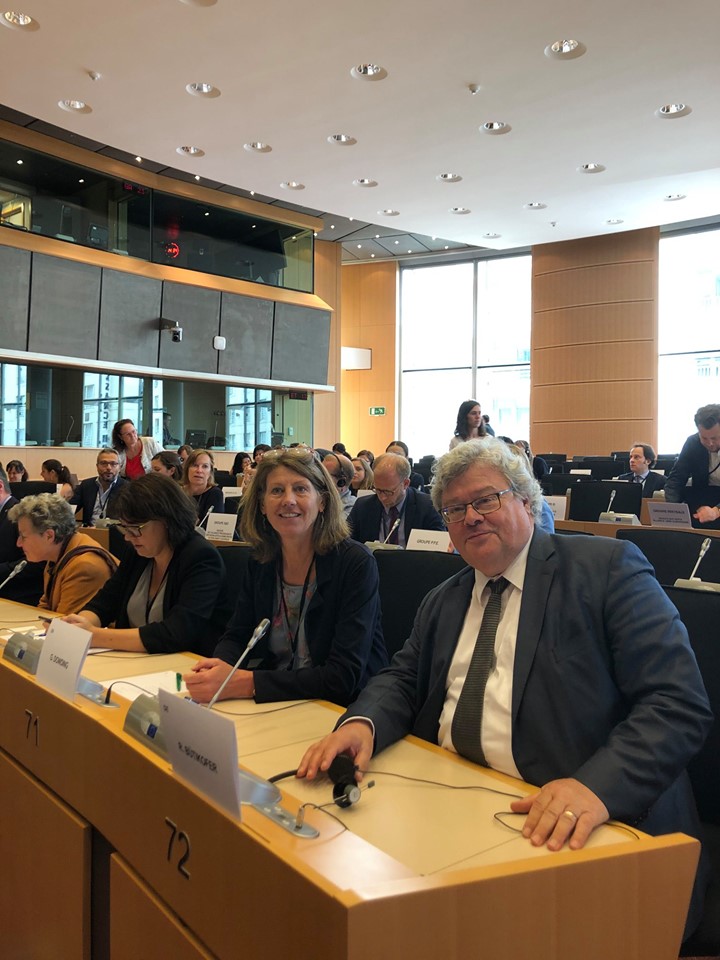
A week with pause to reflect on my time so far in the European Parliament; how it treats MEPs, why it treats us this way and the tools and systems at our disposal – some flawed, some vital.

There have been lots of firsts for me these past few weeks. It’s the first time that I have been elected as a Green to a level of Government higher than local council level. It’s the first time that I have travelled five separate times beyond the borders of Britain in seven weeks; thank goodness for the ease and speed of the Eurostar. It’s the first time I have had a budget to appoint staff to help with my duties as an elected representative; a huge relief to have researchers, administrative support and media help.

Last week’s first was an invitation to give an after dinner speech. This was to the Cumbria and North Lancashire ‘Forward in Europe’ group in Kendal. This group sprung from The European Movement, which has been in existence since 1947, founded after the end of the second world war and centred on fostering peace and cooperation with our European neighbours and partners. Never has there been a greater need for such an organisation. But since the 2016 referendum and before cross-party groups, grass-roots groups like theirs have sprung up all over the country. Ironically, the UK is now probably the most pro-EU country in Europe, with the greatest number of grass-roots groups striving to Remain.

I can’t begin to express my personal and professional excitement and joy at another first: being with so many senior elected representatives from the Green Party in one room. My first day in Brussels involved a meeting of the Green group of over 60 committed, competent, capable and experienced Green MEPs from all over Europe. One of my initial conversations was with Ville Niinistö, a new Finnish Green MEP, who until recently was Government Minister for the Environment in Finland.

In the UK we have Caroline Lucas who as an MP has set the bar high for what can be achieved through parliamentary and campaigning dedication. But due to fairer voting systems in nearly all other European countries, people are used to having Green representation in their national parliaments and indeed in Government.

During preparation for that after dinner speech, I had cause to reflect again about my first impressions of the European Parliament, and some of my first actions as an MEP:

The European Parliament building is modern; maybe some would describe it as post modern. It has masses of space huge ceilings, plenty of light, and a somewhat complicated architectural design internally making it quite difficult to get around. It took a couple of visits until I understood that there is no way to get from one end of the building to the other on all of the floors; there are 12 or more. It’s counter-intuitive to go up to come down but the best place to start is always the third floor!

There is huge a welcome given to MEPs; offices and allowances, assistance and services. This compares interestingly with the experience of Caroline Lucas as she has noted in various books that the welcome for a new MP in Westminster is a dreary office-cum-cupboard if you’re lucky, in a long dark corridor in the bowels of Westminster. Very little is provided: maybe a stack of of old letter-headed papers but above all, the pink ribbon for which MPs can hang their sword.

There is no doubt that MEPs however are treated as VIPs. This was a shock to the system for me, and although it’s something I’m adapting to because it’s the reality and I’m getting on with the work, the trappings and treatment do not sit easy. But as an elected representative of millions of people it’s important to take the role seriously and perform the duties assiduously. The perks, like an in-house medical service, are often more about ensuring MEPs time is used as as effectively as possible.

In Europe, there’s a sense of looking outward. The European Parliament expects and welcomes its activities to be scrutinised. There are media and recording facilities for all to use; the Vox Box corners that MEPs can book in order to film and publicise their activities, are where you will have seen some of my impromptu interviews with other MEPs. The tools available to us are excellent and it’s good to be able to reveal and hopefully demystify the work that goes on here. Last week the film makers said probably less than half MEPs are using the facility.

Much has been said about the cost of the European Parliament and there is definitely scope for efficiencies to be made. Like many other European countries where MPs are paid well, respected and provided with access to resources that enable greater efficiency, the European Parliament similarly offers a good working environment. The awareness of the stark disparity between optimal working conditions and typical ones, is uncomfortable but brings to light another issue that needs addressing.

Meanwhile this week…

Good:

Another interesting and ultimately satisfying process in the European Parliament worth highlighting: the commitment to gender equality enshrined already in some parts of the institutions. My first ‘constitutive’ meeting of the Foreign Affairs Committee, (that’s the first meeting whose business is only to appoint the Chair and the four Vice Chairs) was suspended when it became apparent that the political groups nominating people to specific roles (based across the board on proportional representation relative to size of the groups) had all nominated men to those five positions. After the election of the Chair and the first Vice Chair, the meeting was abandoned and those three groups now have to come up with at least one female nominee between them. The commitment to gender equality only goes so far that one of the five posts has to be a woman/man but still it’s there. I’m pleased to report that at the first constitutive meeting of the Transport Committee no such suspension was required. This is the committee for which the Greens get to nominate the chair and Karima Delli, Green MEP from Northern France is in the chair. She will be working with four Vice Chairs from other groups…all men.

Bad:

Despite the Government’s declaration of a Climate Emergency, they’ve done nothing to halt the progress of yet another fossil fuel source, shale gas. The Environment Agency this week put the health, well-being and future of a Lancashire community, in the hands of fracking firm Cuadrilla when they approved a second round of fracking near Blackpool. Operations had been stalled since October following 57 seismic events. This is the site I took direct action at, along with so many others since the protests started on 5th January 2017. Please do visit and lend support to those at Preston New Road if you can.

Where hope lies:

With climate emergencies declared this week in Burnley as well as Manchester, the message IS getting through; now for the hard work and scrutiny as we hold the Councils and Government to this commitment. It’s about getting started now; reinstating good public transport and halting the building of energy-inefficient homes. Green Party Councillor in Burnley, Andy Fewings who proposed the motion said: “This is not about paying lip service to protecting the environment. We need to see meaningful change in the council’s policies including supplementary planning guidance as lots of housing is not fit for purpose which is exacerbating fuel poverty.”

Onwards 💚


Pride, Misdeeds & Anniversaries

It’s been a very full week again, although thankfully the coming one is looking a lot less action-packed and offers time to review and plan. From the relief of getting a good team of staff to support me with my MEP tasks in place, to reflecting back to the awful ‘misdeeds’ in the Brexit vote, and later the joy of Lancaster Pride this weekend, it’s been a week of seeing the positives and acting on the negatives.

Pride

Back home, Lancaster Pride did Lancaster proud this week in Dalton Square. ‘Unity in diversity’ is a good way to sum it up. Loved meeting the Typhoons RUFC Lancashire’s first and only inclusive rugby team (who practice at Preston Grasshoppers RFC). Straight or gay, any ability, shape, or size they say – everyone welcome as long as you’ve got the right attitude to rugby… and they certainly do! The event was fabulous and fun.

Brexit

Today is the 3rd anniversary of the Referendum that gave us ‘Brexit’; seems like yesterday and an eternity all at once. Our co-leaders of Green Party of England and Wales reflected on what’s happened since: the key critical social and environmental issues that have not been tackled, and two million young voters have been denied a say in their futures.

Siân Berry said:

“Our politics has become entangled in what has been rightly described as Brexit chaos over the past three years. We could, and should, have been dealing with the fast-rising issues of poverty and homelessness, the collapse of bus services and the causes of the filthy air we breathe, the state of our nature-deprived countryside and the struggles of our small farmers to survive. Instead we have been bogged down in party in-fighting, fact-free debates about non-existent Brexit options and arcane struggles over parliamentary procedures.”

Jonathan Bartley added:

“More than two million young people have become voters since the 2016 referendum. Well over another million are aged 16 and 17, seeing society wrestling with issues that will have a huge impact on their futures. That’s more than 3 million people who deserve a say on their own future through the democratic option of the People’s Vote. Parliament has shown itself to be unable to find a way forward. The answer is democracy, and giving those young people the option to have their say.”

EU Parliament

In Brussels, I was pleased to sign a letter calling for an investigation into Brexit electoral ‘misdeeds’ that have come to light. It is a cross-party initiative, co-led by fellow Green, Molly Scott Cato MEP. Molly rightly says: “Brexit is a crime scene, yet our efforts to ensure the perpetrators face justice using the agencies available in the UK…have so far failed.”

Together, we 38 UK MEPs are calling on a high-level international legal commission to intervene over ‘declining democratic standards’ in the UK, asking the commission to investigate: breaches of spending rules and data-protection laws; the exclusion of non-UK EU citizens residing in the UK from voting during the 2016 referendum; the more recent disenfranchisement of UK citizens resident abroad, and EU citizens resident in the UK from the European elections this year.

There’s a lot more to this and an awful lot more to come. Alongside all this, MPs are preparing to take the Met police to court, after the force has failed to investigate alleged offences by Brexit campaigners for nearly a year. Separately, the Brexit Party has been told by the Electoral Commission to check its donations and tighten up its processes, after a loophole was revealed that could allow foreign donations to the party.

Meanwhile, this week:

Good:

The Green Party signed up to support the Manchester Declaration for a Right to Repair worldwide. It’s a call by independent repair businesses and citizens who are frustrated with the early obsolescence of most of today’s products. They ask UK legislators and decision-makers at all levels, as well as product manufacturers and designers, to stand with us for our Right to Repair, by making repairs more accessible and affordable, and ensuring that we adopt product standards making products better supported, well documented and easier to repair by design.

Siân Berry said: “We are committing to using our political influence at local, national and EU level to trigger the switch to a circular economy, and fight for our right to repair.”

Here’s a link to further information about the project.

Bad:

Just 0.34% of the UK”s population will now decide who the next PM is to be. Many of us lament the system that allows this to happen. Can we do anything to change this? Not right now but the fight for fairer voting and more representative democracy is at the core of the Green Party policies and we will not stop fighting for them.

Where hope lies:

Students, young people and school pupils rose again on Friday for another YouthStrike4Climate march and here in the North West, despite some Chorley students being told they cannot now go to their School Prom because they participated in the Strike, they participated in the Strike, they are not deterred. And that gives me inspiration.

Onwards 💚


Scarborough to Penrith via Brussels

An incredibly varied week has come to an end. It’s been a week where I’ve noted the stark contrast between the work I’m doing in Europe and the headlines here at home.

The one thread that connected my week was the genuine intent of the people I’ve had the privilege to be with; from the Greens driving policies at Conference in Scarborough last weekend, to European Green MEP colleagues seeking to find consensus in Brussels, to the commitment of Green Party members and campaigners in Penrith. People who just keep going, accepting that it’s not easy to fight for the high level change and justice that are so desperately needed, and who keep showing up and doing the work needed.

I’m still finding my feet and waking up checking ‘where I am today’! These are busy but productive days and it was good to find space for team building. A meeting between us seven UK Green MEPs who are now officially a delegation – it was the first time we had actually been in one room together! And back home to develop my own team for the future. As a Councillor there are no allowances for support staff but as an MEP, it’s essential to have staff to fulfil the role. The recruitment process underway is very time-consuming: it’s a delight to have such good quality applications and I look forward to having contracts signed soon.

In Brussels discussions in our Green group centred around the negotiation processes that have now started with the other big blocs in the Parliament. We’re seeking for key Green policies to be incorporated into the programme for the next five years of the Parliament, before our support for the next mandate is provided. The balance of power has shifted from the S&D (sort of Labour types) and EPP (sort of Conservative types but not including the British Tories as they are in a grouping yet further to the right.) These two blocs have until now had a majority in the Parliament. The Green /EFA group is not going to squander the opportunity to try to get major concessions for climate, environmental, social and economic justice in this new term.

Back in the UK, I met with Jaki Bell of Cumbria Action for Sustainability (CAFS), to hear about the projects they lead for a transition to a zero carbon future. From the Cumbria Green Build Festival to thermal imaging services for individual householders to see where homes are losing heat and how to tackle energy efficiency, CAFS is the leading non-government organisation in Cumbria tackling energy efficiency issues in the built environment. The work they’re doing is inspiring and because they’re not funded by government, they have to look for funding for every single project.

Jaki highlighted some of the biggest barriers to tackling this crucial issue of reducing the energy we use in heating and lighting our homes. This alone consumes totals 16% of our total carbon budget. Improvements we make in the built environment create great wins all round; tackling fuel poverty, tackling energy costs and creating jobs. One of the biggest barriers right now is the fact that the government has cut the feed-in tariff and shows no signs of support for solar installation in domestic and community buildings.

At the end of the day and nearer home, I caught up with Lancaster’s Global Link’s Refugee Week event; a beautiful circular walk from Carnforth, encompassing some of beautiful Lancashire/Cumbria border landscapes which ended with a shared meal and stories of flight and detention. I was humbled to be alongside refugees, asylum seekers, residents and support organisations who are calling for an end to indefinite detention for asylum seekers. The UK is the only country in Europe that detains people indefinitely. Surely this is not a mark of a civilised society and it’s time this practice came to an end. On this issue I am absolutely sure that the British people want the Government to show more compassion and humanity.

Meanwhile this week

Good:

Pope Francis met the world’s biggest multinational oil companies in the Vatican on Friday to: ‘impress upon them the urgency and scale of the challenge, and their central role in tackling the emissions crisis’. He declared a global “climate emergency”, warning of the dangers of global heating and that a failure to act urgently to reduce greenhouse gases would be “a brutal act of injustice toward the poor and future generations”.

Link here.

Bad:

Worryingly here in the UK (in complete contrast to the surge in Green votes and Green MEPs to the EU Parliament), the fight to become Prime Minister is clearly not based on the skills, honesty, integrity or intent of the candidates. This piece by Nick Cohen in today’s Guardian puts it very plainly:

Link here.

Where hope lies:

There was a lovely story out this week about students in Swinton under the headline:

Swinton Academy students build eco-friendly greenhouse using 1,500 plastic bottle as they tackle climate change.

And there are bigger issues at stake. The Youth are not sitting still, stalling or waffling around the key issue in their lives. This Friday will see another Youth Strike 4 Climate march and I’d urge you to find one near you to attend in support. I look forward to joining Lancaster’s youth strike group on Friday. I will have been to Brussels and back again by then!

Onwards 💚

Gina