Women’s Voice: Fact Finding Report on Kashmir

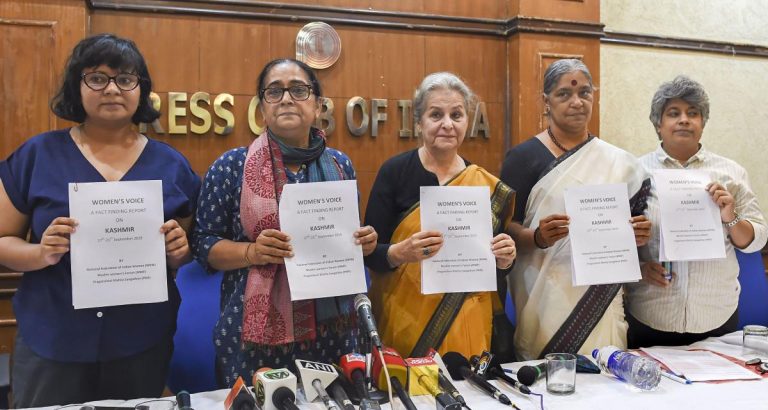
The below unedited report: Women’s Voice: Fact Finding Report on Kashmir (September 17-21, 2019) released by five prominent Indian activists, journalists and community members from the National Federation of Indian Women and the Muslim Women’s Forum India, on the grave human rights situation in Indian-occupied Jammu and Kashmir (IOJ&K), post-Indian actions of 5 August 2019. The team visited rural and urban areas across Kashmir and interviewed local men, women and children.

***********

A five-member team of eminent activists, journalists and civil society members recently returned from Kashmir. The all-woman team has now shared its findings on the situation on the ground in the region that still remains by-and-large cut off from the rest of the country, the communication blackout enabling unspeakable excesses against the local population by the military.

The team comprising Annie Raja, Kawaljit Kaur, Pankhuri Zaheer from National Federation of Indian Women, Poonam Kaushik from Pragatisheel Mahila Sangathan and Syeda Hameed from the Muslim Women’s Forum India visited Kashmir between September 17 and 21. Apart from Srinagar, the women visited several villages in Shipian, Pulwama and Bandipora to take stock of ground realities. They have now released their report based on eye witness accounts and case studies of those who have actually suffered.

These are lines by Comrade Abdul Sattar Ranjoor. We held these as a beacon during our four-day sojourn in a locked and shuttered land called Kashmir.

Spring buds will flower
Nightingales’ pain will abate
Lovers wounds will start healing
Sickness will leave the ailing
Heart’s longing of Ranjoor will be fulfilled
When the poorest will rule
Wearing the crown of glory

(Ranjoor was killed in 1990)

A team of 5 women visited Kashmir from September 17th-21st 2019. We wanted to see with our own eyes how this 43-day lockdown had affected the people, particularly women and children.

The team consisted of Annie Raja, Kawaljit Kaur, Pankhuri Zaheer from National Federation Indian Women, Poonam Kaushik from Pragatisheel Mahila Sangathan and Syeda Hameed from Muslim Women’s Forum.

Besides spending time in Srinagar, we visited several villages in the districts of Shopian, Pulwama and Bandipora. We went to hospitals, schools, homes, market places, spoke to people in the rural as well as urban areas, to men, women, youth and children. This Report is our chashmdeed gawahi (eye witness account) of ordinary people who have lived for 43 days under an iron siege.

Shops closed, hotels closed, schools, colleges, institutes and universities closed, streets deserted was the first visual impact as we drove out from the airport. To us, it seemed a punitive mahaul that blocked breathing freely.

The picture of Kashmir that rises before our eyes is not the populist image; shikara, houseboat, lotus, Dal Lake. It is that of women, a Zubeida, a Shamima, a Khurshida standing at the door of their homes, waiting. Waiting and waiting for their 14, 15, 17, 19-year-old sons. Their last glimpse is embedded in each heart, they dare not give up hope but they know it will be a long wait before they see their tortured bodies or their corpses… if they do. ‘We have been caged’ these words we heard everywhere. Doctors, teachers, students, workers asked us, “What would you do in Delhi if internet services were cut off for 5 minutes?” We had no answer.

Across all villages of the four districts, peoples’ experiences were the same. They all spoke of lights, which had to be turned off around 8PM after Maghreb prayers. In Bandipora, we saw a young girl who made the mistake of keeping a lamp lit to read for her exam on the chance that her school may open soon. Army men angered by this breach of ‘curfew’, jumped the wall to barge in. Father and son, the only males in the house were taken away for questioning. ‘What questions?’, no one dared ask. The two have been detained since then. ‘We insist that men should go indoors after 6 PM. Man or boy seen after dusk is a huge risk. If absolutely necessary, we women go outside’. These words were spoken by Zarina from a village near Bandipora district headquarters. ‘In a reflex action, my four-year-old places a finger on her lips when she hears a dog bark after dusk. Barking dogs mean an imminent visit by the army. I can’t switch on the phone for light so I can take my little girl to the toilet. Light shows from far and if that happens our men pay with their lives’.

The living are inadvertently tortured by the dead. ‘People die without warning or mourning. How will I inform my sisters about their mother’s death?’ Ghulam Ahmed’s voice was choked. ‘They are in Traal, in Pattan. I had to perform her soyem without her children’. The story was the same wherever we went. People had no means of reaching out to loved ones. 43 days were like the silence of death.

Public transportation was zero. People who had private cars took them out only for essential chores. Women stood on roadsides, flagging cars and bikes for rides. People stopped and helped out; the helplessness of both sides was their unspoken bond. ‘I was on my bike going towards Awantipora. A woman flagged me. My bike lurched on a speed breaker. She was thrown off. I took her to the nearby hospital. She went in a coma. I am a poor man how could I pay for her treatment? How and who could I inform?’ These daily events were recounted wherever we went. At a Lalla Ded Women’s Hospital in Srinagar several young women doctors expressed their absolute frustration at the hurdles that had been placed in their way since the abrogation of Article 370. ‘There are cases where women cannot come in time for deliveries. There are very few ambulances, the few that are running are stopped at pickets on the way. The result? There are several cases of overdue deliveries that produce babies with birth deformities. It is a life long affliction, living death for parents”. Conversely, we were told that several women are delivering babies prematurely due to the stress and khauf (fear) in the present condition. “It feels like the government is strangling us and then sadistically asking us to speak at the same time,’ a young woman doctor said as she clutched her throat to show how she felt.

A senior doctor from Bandipora Hospital told us that people come from Kulgam, Kupwara, and other districts. Mental disorders, heart attacks, today there are more cases than he could ever recall. For emergencies junior doctors desperately look for seniors; there is no way of reaching them on phone. If they are out of the premises, they run on the streets shouting, asking, searching in sheer desperation. One orthopaedic doctor from SKIMS was stopped at the army imposed blockade while he was going for duty. He was held for 7 days. Safia in Shopian had cancer surgery. ‘I desperately need a check-up in case it has recurred. Baji, I can’t reach my doctor. The only way is to go to the city, but how do I get there? And if I do, will he be there?’ Ayushman Bharat, an internet-based scheme, cannot be availed by doctors and patients.

Women in villages stood before us with vacant eyes. ‘How do we know where they are? Our boys who were taken away, snatched away from our homes. Our men go to the police station, they are asked to go to the headquarters. They beg rides from travellers and some manage to get there. On the board are names of ‘stone-pelters’ who have been lodged in different jails, Agra, Jodhpur, Ambedkar, Jhajjar.’ A man standing by adds, ‘Baji we are crushed. Only a few of us who can beg and borrow, go hundreds of miles only to be pushed around by hostile jail guards in completely unfamiliar cities.’

At Gurdwaras we met women who said they have always felt secure in Kashmir. ‘Molestation of women in rest of India about which we read is unheard of in Kashmir’. Young women complained they were harassed by the army, including removal of their niqab

‘Army pounces on young boys; it seems they hate their very sight. When fathers go to rescue their children they are made to deposit money, anywhere between 20000 to 60000’. So palpable is their hatred for Kashmiri youth that when there is the dreaded knock on the door of a home, an old man is sent to open it. ‘We hope and pray they will spare a buzurg. But their slaps land on all faces, regardless whether they are old or young, or even the very young. In any case, Baji, we keep our doors lightly latched so they open easily with one kick’. The irony of these simply spoken words!

Boys as young as 14 or 15 are taken away, tortured, some for as long as 45 days. Their papers are taken away, families not informed. Old FIRs are not closed. Phones are snatched; collect it from the army camp they are told. No one in his senses ever went back, even for a slightly expensive phone. A woman recounted how they came for her 22-year-old son. But since his hand was in plaster they took away her 14-year-old instead. In another village, we heard that two men were brutally beaten. No reason. One returned, after 20 days, broken in body and spirit. The other is still in custody. One estimate given to us was 13,000 boys lifted during this lockdown. They don’t even spare our rations. During random checking of houses which occurs at all odd hours of the night, the army persons come in and throw out the family. A young man working as SPO told us. ‘We keep a sizeable amount of rice, pulses, edible oil in reserve. Kerosene is mixed in the ration bins, sometimes that, sometimes koyla’.

Tehmina from Anantnag recently urged her husband, ‘Let us have another child. If our Faiz gets killed at least we will have one more to call our own. Abdul Haleem was silent. He could see the dead body of his little boy lying on his hands even as she spoke these words. ‘Yeh sun kar, meri ruh kaanp gayi,” he tells us.

A 30-year-old lawyer from Karna was found dead in his rented accommodation. He was intensely depressed. Condolence notice was issued by Secy Bar Association. Immediately after that, he was taken into custody. Why? We spoke to a JK policeman. All of them have been divested of their guns and handed dandas. ‘How do you feel, losing your guns?’ ‘Both good and bad’ came the reply. ‘Why?’ Good because we were always afraid of them being snatched away. Bad because we have no means now to defend ourselves in a shootout. One woman security guard said ‘Indian government wants to make this a Palestine. This will be fought by us, Kashmiris’. One young professional told us, ‘We want freedom. We don’t want India, we don’t want Pakistan. We will pay any price for this. Ye Kashmiri khoon hai. Koi bhi qurbani denge’.

Everywhere we went there were two inexorable sentiments. First, desire for Azadi; they want nothing of either India or Pakistan. The humiliation and torture they have suffered for 70 years has reached a point of no return. Abrogation of 370 some say has snapped the last tie they had with India. Even those people who always stood with the Indian State have been rejected by the Govt. ‘So, what is the worth in their eyes, of us, ordinary Kashmiris?’ Since all their leaders have been placed under PSA or under house arrest, the common people have become their own leaders. Their suffering is untold, so is their patience. The second, was the mothers’ anguished cries (who had seen many children’s corpses with wounds from torture) asking for an immediate stop to this brutalisation of innocents. Their children’s lives should not be snuffed out by gun and jackboots.

As we report our experiences and observations of our stay in Kashmir, we end with two conclusions. That the Kashmiri people have in the last 50 days shown an amazing amount of resilience in the face of brutality and blackout by the Indian government and the army. The incidents that were recounted to us sent shivers down our spines and this report only summarises some of them. We salute the courage and resoluteness of the Kashmiri people. Secondly, we reiterate that nothing about the situation is normal. All those claiming that the situation is slowly returning to normalcy are making false claims based on distorted facts.

Poets speak for humankind. We began our report with lines from the Kashmiri poet Ranjoor, we end with lines from Hindi poet Dushyant. Both indicate the way forward for Kashmir:

Ho gayi hai peerh parbat si pighalni chahiye
Iss Himalaya se koi Ganga nikalni chahiye

We Demand:

1. FOR NORMALCY Withdraw the Army and Paramilitary forces with immediate effect
2. FOR CONFIDENCE BUILDING Immediately Cancel all cases/ FIRs and Release all those, especially the youth who are under custody and in jail since the Abrogation of Article 370
3. FOR ENSURING JUSTICE Conduct inquiry on the widespread violence and tortures unleashed by the Army and other security personnel.
4. COMPENSATION to all those families whose loved ones lost lives because of non-availability of transportation and absence of communication.

In Addition:

• Immediately restore all communication lines in Kashmir including internet and mobile networks.
• Restore Article 370 and 35 A.
• All future decisions about the political future of Jammu and Kashmir must be taken through a process of dialogue with the people of Jammu and Kashmir.
• All army personnel must be removed from the civilian areas of Jammu and Kashmir.
• A time-bound inquiry committee must be constituted to look into the excesses committed by the army.

[Kindly note. To protect the identity of the people we met, all names in the Report have been changed. We have not named the villages we visited for the very same reason]

The report is available here.
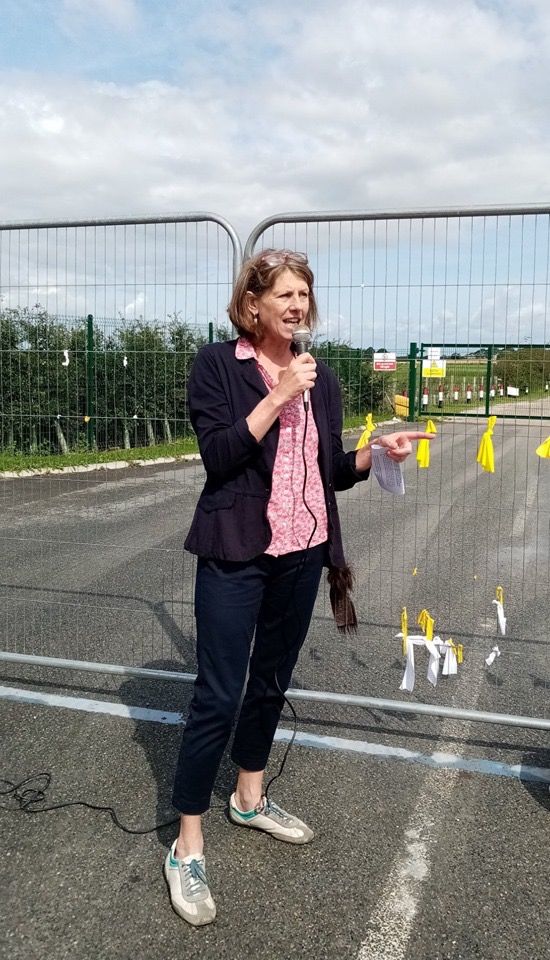
 

REACTION TO CUADRILLA’S ANNOUNCEMENT OF FRACKING KIT TO LEAVE LANCASHIRE SITE

Gina Dowding, Green MEP for the North West said:

“After completing just a few fracks back in August, and provoking another run of earthquakes, Cuadrilla have announced they will now be flow-testing whatever gas they may have found.

“Cuadrilla seem to be compulsively over-optimistic about their predicament.

“They have been over-optimistic since the very beginning of their operations. However, the fears and concerns of local campaigners have been justified every time they fracked.

“As they were able to frack just seven stages out of the planned 47 in the second well, it seems very unlikely that a commercially viable gas flow has been stimulated at Preston New Road.

“After the 2.9ML fracking earthquake that thousands of people felt across the Fylde and beyond, with many reports of property damage, there is no reason to believe that any future operations by Cuadrilla will achieve any other result. Their 100% failure record remains unblemished.”


Tackling Racism, Research and Rudeness

The contrasts between the Parliaments of the UK and the EU have never been starker than this week. I watched from Brussels as our UK MPs returned at last to the House of Commons only to end up embroiled in ugly scenes of disrespect and outright misogyny. It feels like we’re in dangerous territory and the situation is failing to improve despite the Supreme Court ruling making it clear that PM Johnson acted unlawfully.

In Brussels this week, the scenes playing out for me were warm, professional and with clear purpose; from the Shared Future Hearing attended by MEPs from many parties from the Republic, Northern Island and Britain, to the inspirational launch of work on anti-racism and diversity in the European Parliament and the huge exhibition and consultation days on research and innovation.

Back home and along with Cumbrian architects, sustainability experts and representatives from other political parties, I joined a panel discussion and Q&A following the film screening of the film The Age of Stupid in Keswick; and then to the fabulous Make it Matter Craft Fair in Cockermouth. I write this as I prepare to speak at the rally in Manchester (during the Conservative Party Conference) calling to ‘Defend Democracy and Reject Brexit’.

Shared Future Hearing

I attended this first cross-party hearing on Brexit in the European Parliament on the impact of Brexit on the island of Ireland. With a keynote speech from former Irish Taoiseach, John Bruton, we watched a direct message from Tony Blair, had powerful accounts from community groups (both ‘sides’) and young people who had come from Northern Ireland and were reminded of just how hard-won and valued the Good Friday Agreement is.

Organised by Alliance Party MEP Naomi Long, the #BrexitHearingEU warned how devastating a Brexit could be on the peace process. All agreed that no hard border on the island of Ireland could be tolerable and that no realistic suggestions have been made to avoid it. It seems to many that this is a circle that just cannot be squared.

A highlight for me was hearing from Ellie Crawford of the Northern Ireland Student Climate Network and Doire Finn, co-founder of ‘Our Future, Our Choice’ who are determined to ensure that young people across Northern Ireland have their voices heard and gain a People’s Vote.

Anti-racism and diversity at EU Parliament #ARW19

Fantastic energy and commitment to anti-racism and diversity action at #ARW19 this week. It was uplifting to see our own Magid Magid MEP co-chairing and launch this new formally recognised cross-party ‘intergroup’ within the Parliament to address racism and increase diversity, with support from The European Network Against Racism (ENAR), a network of member organisations across Europe aiming to combat racism, racial discrimination, xenophobia.

Afterwards, I connected with Laurie and Kim from The Runnymede Trust, the UK’s largest race equality organisation, which has produced some extremely helpful briefings. One particularly welcome is about how we challenge current discussion around race and class. In short, they advocate a public conversation about politics and inequality which builds solidarity across ordinary people to address the urgent issues facing society today.

What we’re up against is that ordinary people from all backgrounds, from the rural towns of northern England to the tower blocks of London, have been divided and pitched against one another. Too often, people are pitched along the lines of Brexiteers/Remainers, deserving/undeserving, British/foreigner, white/migrant/BAME. So I’m pleased to have met these wonderful women. As well as Zlachar from Apna Haq. Short video clips coming soon.

Research & Innovation

Mid-week, I attended a couple of sessions in the European Commission’s research and innovation days – tentatively reassuring to hear loud and clear commitment within the Industry and Digital cluster to the Horizon Europe (research funding) objectives to research the circular economy innovation and climate-related activities. Europe is ahead again in terms of understanding the importance of the circular economy whereby industrial processes must use and produce materials that are inherently recycled and recyclable.

This was a massive event in a Brussels exhibition centre, and I was disappointed not to have had time to visit more stalls or sessions (the future generations of sustainable batteries nor to experience Sea Bubbles – the zero-emission boat on the canal outside). I am ever-more excited to be the Greens/EFA representative on these themes of EU work.

Formal business

Among other formal business, I also attended the Transport and Tourism Committee Meeting. All of the European Parliament’s committees are preparing for ‘hearings’ with the new Commissioners-designate (the new ‘college of Commissioners’ in-waiting). One Commissioner from each member state is proposed by the new President of the Commission, Ursula von der Leyen.

Each committee can give its consent to, or recommend rejection of the proposed commissioner for their specialist area. The Greens/EFA use this opportunity to test the understanding and real commitment of each Commissioner-designate to the values and climate targets the EU has set.

Supreme Court ruling

The UK Supreme Court ruling confirming that PM Boris Johnson’s proroguing of Parliament was unlawful, was a relief to hear. It had seemed obvious to most that the PM’s motivation was not for the good of the country, but to fulfil his own political agenda.

You can watch my short statement on this momentous ruling hereIn the press, I joined many in calling for Mr Johnson’s immediate resignation, and for Parliament to be reconvened straight away so that it could “begin to chart a sensible path through this national crisis”. Seeing Parliament return though was only briefly uplifting as the atmosphere and behaviour of some MPs were hostile and unprofessional. It was clear Johnson always wanted to make his mark on history – in reality, he has left an unpleasant stain on democracy. I just hope it will fade in time.

Meanwhile this week

Good

I was delighted to be in Cumbria for 24-hours (a treat to be in the rural landscape, even if briefly!) and enjoyed discussions with the crowd who came to the see the decade-old but must-see The Age of Stupid film. Highlighting inaction on climate as nothing less than stupidity, another ten years have passed when we could have been working on developing solutions. So good that organisations such as Cumbrian Action on Sustainability‘s Green Build Festival have been developing and showcasing solutions for energy-efficient and zero-carbon homes. In Cockermouth, the Taste Cumbria fair was busy selling locally made, delicious and healthy foods. Just as it should be.

Bad

The way the House of Commons has looked this week has been ugly and painful to watch. The European Parliament is a pleasure to work in: a respectful, professional and fair workplace with resources, processes and behaviours that go a long way to improving outcomes. My heart goes out to those elected to be in the House of Commons who simply want to represent their electorate and do the job of an MP – rather than facing a barrage of booing and rudeness that only succeeds in further hindering any hope of good-purpose shining through.

Where hope lies:

Reading about the potential for Britain to enjoy 400 billion more flowers if road verges were cut later and less often! Wildlife charities have drawn up guidelines drawn along with highways authorities and contractors that show how this will provide grassland habitat the size of London, Birmingham, Manchester, Cardiff and Edinburgh combined. Stunning what the little changes can do!

Onwards


Youth, Truth and Reason

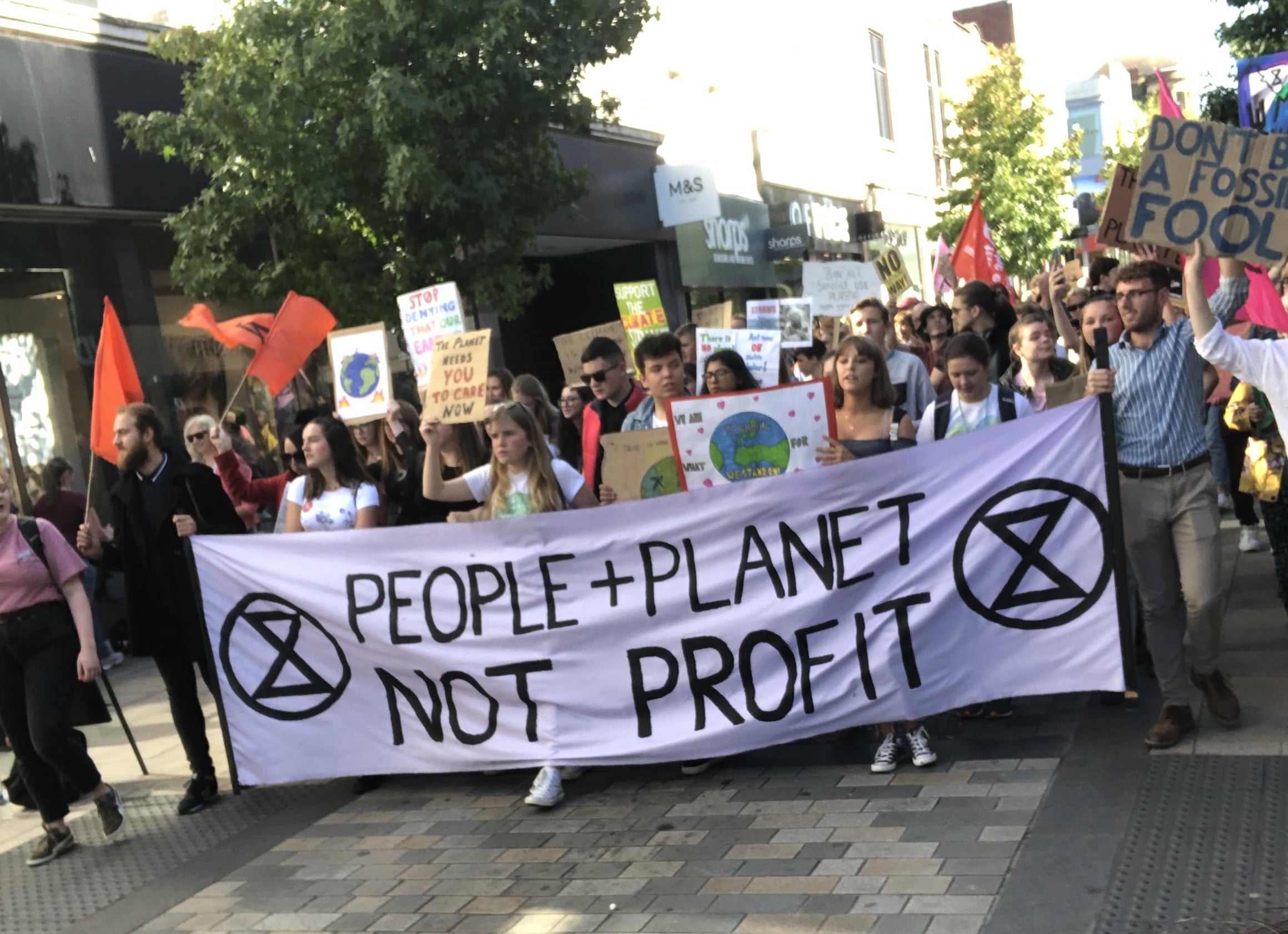
Leading this week’s thoughts and therefore this summary, the global #ClimateStrike that took place on Friday. The scenes unfolding on the news as each location started their day, were quite breathtaking! Young, hopeful, enthusiastic faces filled the screens and the streets with determination and clear messages. I joined two of our North West strikes, in Preston and Lancaster and came away revitalised after a busy week that started in Strasbourg on Monday. Along with fellow MEPs, we took a vote on a Resolution prompted by the potential for a ‘no-deal Brexit’ and the prorogation of UK parliament. Later in the week, on the eve of the climate strikes, Green MEPs led the call for a fracking ban – I hope you got to see the video. I also attended the Lancashire County Council meeting to discuss pensions.

#ClimateStrike

It’s the power of the people that demands parliamentarians address climate issues that have been for far too long, ignored. Nothing has had more impact than the call from the young climate strikers that started with the inspirational Greta Thunberg just one year ago.

On Friday, as I joined two amazing events (Preston and Lancaster) I was so buoyed by the energy and determination I saw. The young particularly, speaking such clear, plain, truths to power; it made me wonder why it is such a surprise to hear such honesty? I think it was Greta who said that it’s because the young have no concern for ‘Power’s’ view of them, so they can speak with without thinking of the consequences to themselves, whereas adults speak with the concerns of reputation etc. Every young hand that took a microphone on Friday, broadcast what we as adults, and those in positions of power, absolutely needed to hear.

I spoke on the day about the significant role each of us had at the #ClimateStrike – in this truly global movement and that it’s actions like this that are going to make the climate transition to a zero-carbon economy happen. I also took the opportunity to thank those who showed the confidence to elect me as the first MEP for the Green Party in the North West – showing a willingness to say yes to change and to getting new ideas from the North West, into the EU Parliament. And it’s in the EU Parliament that I see how hard the Greens are fighting, for the vision we all want to see. The May 2019 elections were called the ‘climate elections’ as the Green surge exemplifies.

What we were saying on Friday to politicians – locally, nationally (when they’re open!) in the EU and internationally was that we want action, not words, system change, not climate change and those changes have to start now.

Our demands are simple:

  1.  No new fossil fuels (and the shale gas industry can pack up and get out of Lancashire right now!)
  2. An end to existing dirty fossil fuels. We need to power down from coal, oil and gas and power up renewables. We’ve got the technology and the answers, all we need is a level playing field. For every pound invested in renewables, we get cleaner energy as well as more jobs; this transition will solve other problems we currently face too.
  3. A just transition across all sectors from sustainable transport systems; energy efficiency new buildings retrofitting our old ones to achieve both environmental and social benefits (end to fuel poverty); changes to the way we use the land, how we grow our food; and a circular economy. Recycling and renewables will bring jobs, reduce harm to the planet and improve our lives – what’s not to love? In essence this the Green New Deal. It’s not complicated but what’s needed is political will.

Everyone who took part in Friday’s protest was on the right side of history – in fact, we were history!

Strasbourg

This week, the European Parliament moved to Strasbourg for the formal and high-pressure plenary sessions when the media attendance (and the marginal Brexit Party MEPs) are in full swing. There was an intense and serious atmosphere when we sat for the day’s business on Wednesday: the President of the EU Commission, Jean Claude Junker and the chief negotiator Michel Barnier had been in attendance earlier. The subject: “The UK’s withdrawal from the EU”.

The session was informative and resulted in the EU Parliament passing a resolution which insists that any Brexit deal must include the Irish Backstop, or equivalent legally-binding guarantees. It also calls on our UK government to produce written proposals on a backstop alternative and makes clear the EU Parliament’s support for a Brexit extension in a wide range of circumstances, including avoiding no-deal, an election, a second referendum, ratifying the agreement or revoking article 50. The resolution passed by 544 to 126 MEPs; (NB it is not, however, the European Parliament that has the final say: it is the European Council i.e. the Heads of Government of the other 27 countries at heir meeting on October 17th).

Kashmir

The last day of plenary receives ‘urgency motions’ whereby the European Parliament calls for action on (or condemnation of) human rights abuses worldwide. More powerful than those are ‘plenary initiatives’ which warrant fuller debate and this time I spoke regarding the situation Kashmir; in which the High Representative of the Union for Foreign Affairs and Security Policy (comparable in layman’s terms to an EU’s Foreign Secretary). The call includes for the Indian government to reinstate civil rights, and to stop the lockdown. While there has been a long-running conflict in the region, the current clampdown on civic life by the Indian government further jeopardises any diplomatic process achieving peace. In the North West, we have many settled communities of Kashmiri heritage, desperately concerned about their loved ones.

Meeting the lobbyists

Along with Molly Scott Cato MEP, I met with two representatives from Make UK, champions of British manufacturers and manufacturing with almost 3 million employed in this sector in Britain. We talked about how a ‘no-deal’ would drastically hit this sector no matter how well businesses had prepared. Make UK made it clear that in any forthcoming general election Make UK will be arguing the case for remaining in the EU, one of the first times as an organisation they had not supported Conservative Party policy.

Make UK fall into the category of lobbyists. I have formally met with Tech UK and the Federation of Small Businesses. In the interest of transparency, I will be publishing a full list of anyone I meet!

The incoming EU Commissioners

A much stranger meeting was with a representative from the European External Action Service who asked to talk to me about the ‘commissioner-designate’ (that’s the person the President of the Commission, Ursula von der Leyen, has nominated) who has been earmarked to take on the portfolio for ‘Neighbourhood and Enlargement’. As a member of the Foreign Affairs Committee, I will, in any case,e be part of the hearings with the said Lazlo Trocsanyi from Hungary. As a group, the Greens plan the kind of questions they want to put to all the incoming commissioners during the next few weeks.

Pensions

At the meeting at Lancashire County Council for the Pensions Committee on Friday morning, I tried again to strengthen our call, as a Local Government Pension Fund, to exert our powers for better ethical investing (albeit this is not the language they want to hear). I asked for a report on how and what is needed for us (investors) to obtain more information about how much the companies we invest in are spending on lobbying. Current requirements of the FTSE companies to report amounts on lobbying are woefully lacking. This means that activities by companies who, despite PR the contrary, may be trying to resist regulation or higher standards are not transparent.

Meanwhile this week

Good

Chorley Council set a great example of how to work with the community together on the issue of our lifetimes, the climate emergency. Councillors and staff coming out to speak to young strikers, with respect and a genuine aim to include their voices in reaching for solutions.

Bad

Lancashire County Council refusing to send anyone downstairs to speak to climate strikers in their reception; instead, the police came and ushered staff out of back doors and behaved as if there was a terrorist threat – rather than Lancashire’s young people calling for help!

Where hope lies

Unsure if it will be where hope lies but the Supreme Court will rule later in the week on the use of prorogation by the PM – will be watching closely to see where this leaves the state of UK politics that currently teeters on the edge of mayhem.

Onwards


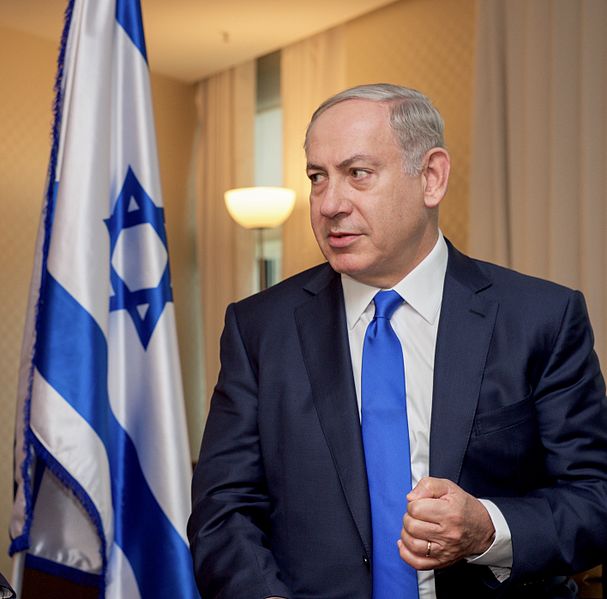
NETANYAHU’S PLAN FOR  ANNEXATION OF PARTS OF THE WEST BANK IS “AGGRESSIVE AND ILLEGAL”

Green MEPs in the UK have condemned Netanyahu’s aggressive and illegal plan to annex large parts of the West Bank into Israel, as the Israeli Prime Minister commits Israel to more outrageous flouting of international law as part of his latest electioneering.

Gina Dowding, Green MEP for North West England, has just recently returned from a cross-party fact-finding trip for MEPs to Palestine-Israel and stated:

“I was quite shocked at the changes in the occupation of Palestine since I was last there in 2010. Everything there has deteriorated for the lives of people having to exist under the occupation. The only thing that remains strong, is the determination of the Palestinian people.

“Israel’s decades-long illegal occupation of the Palestinian territories is a systematic humiliation of Palestinians in the West Bank. It has grown increasingly unbearable for Palestinians, as the number and size of illegal settlements created by Israel have expanded deep into the land within the borders of a future State of Palestine.

“Netanyahu wants to think of himself as Prime Minister of a modern democracy, but he has no regard for international law. His plans for annexation should be sending a shiver down the spine of the international community.

“Both the United Nations and European Union have all been far too weak in responding to the occupation, Netanyahu’s blatant disregard for the future of a negotiated peace and the two-state solution.

“His latest plans must be a wake-up call. Should Netanyahu’s dangerous vision of apartheid proceed, an urgent and serious international diplomatic response should follow.

“The Blue and White party, considered to be the main opponents of Netanyahu in the election next week, have echoed similar sentiments about plans for the West Bank. This is a lifelong tragedy for generations of Palestinians.

“European governments and the European Union must turn their attention to ending the oppression of people in the West Bank.”